Bible Atlas
Explore the Bible visually: interactive maps, timelines, and family trees of every person, place, and event in Scripture.
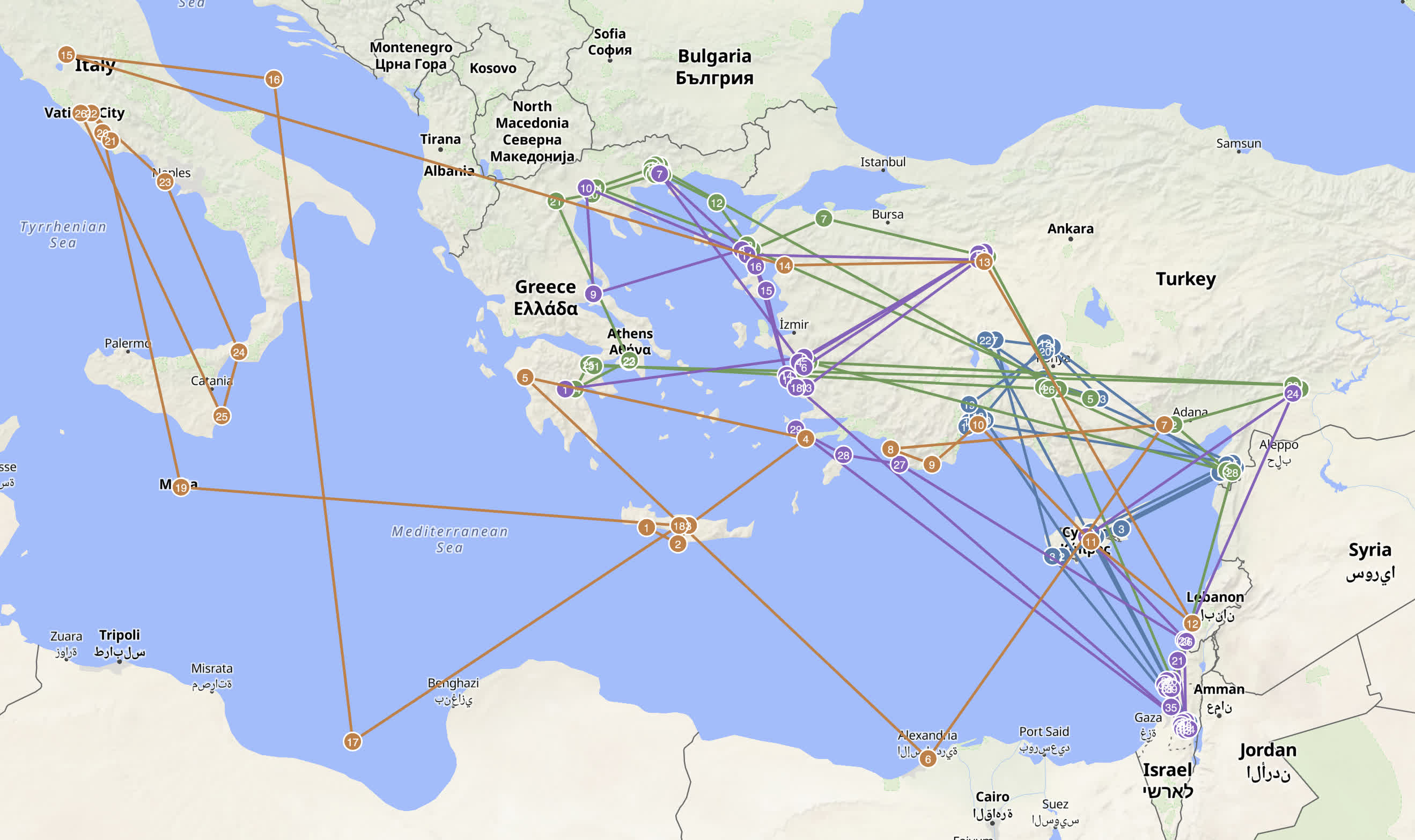
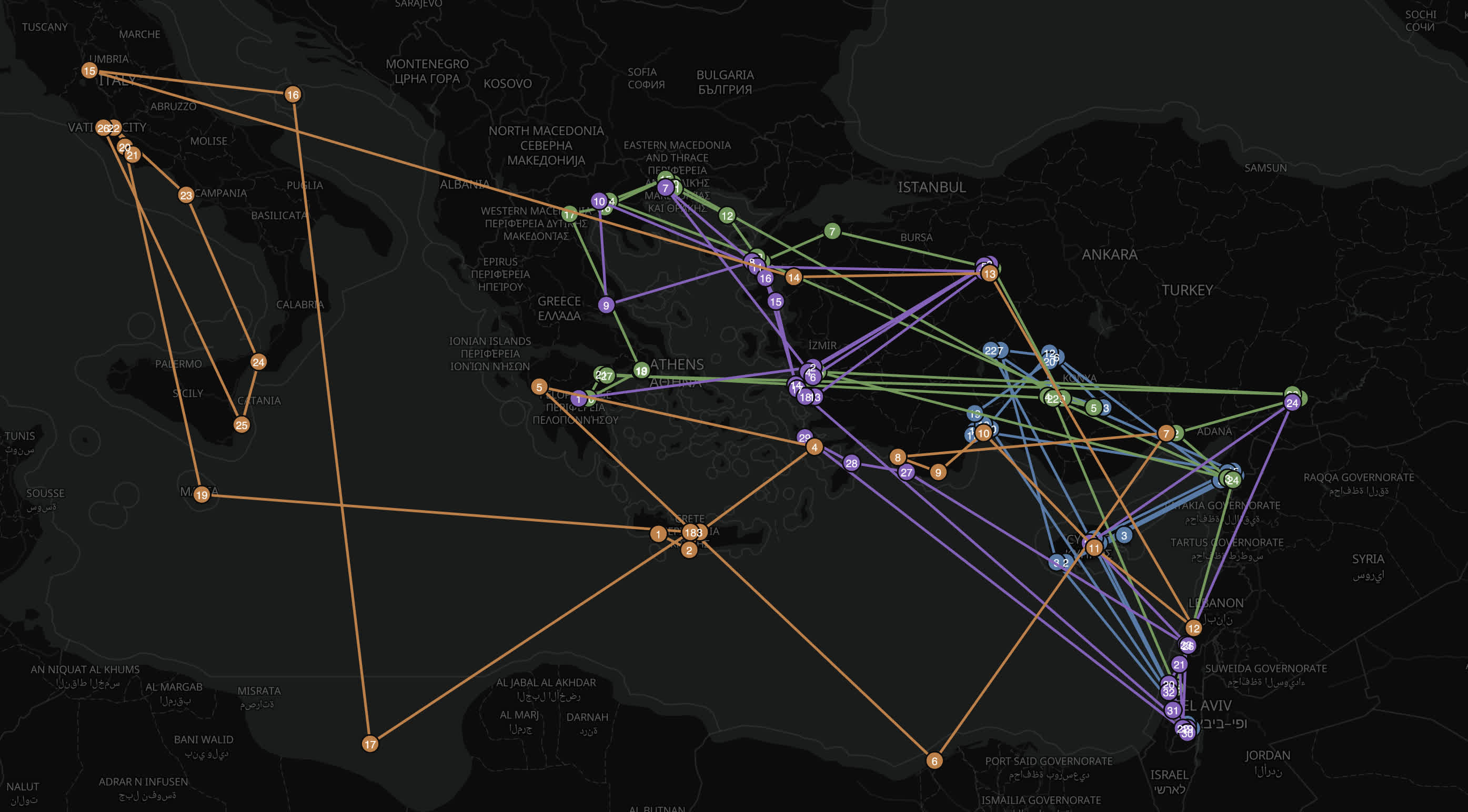
Paul's journeys across the Mediterranean, traced by ship, on foot, and under guard.
Three major family lines in Scripture: the twelve tribes of Israel, the ancestry of Jesus, and the descendants of Cain.
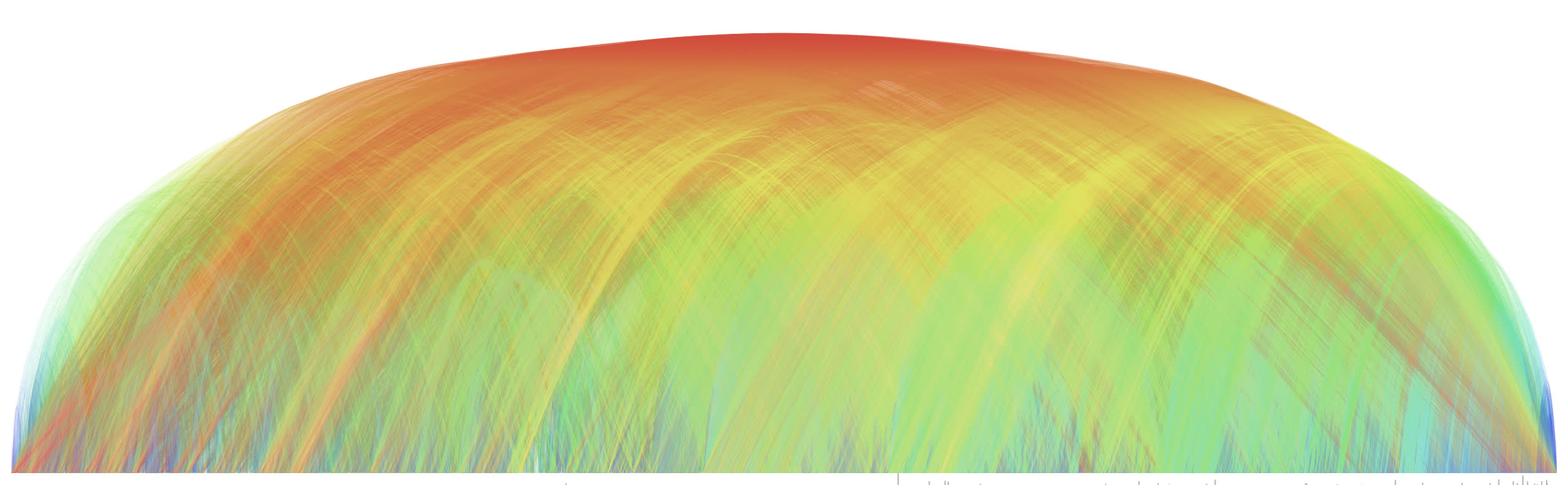

All 31,102 verses arranged in order, with cross-references drawn between the passages they connect.
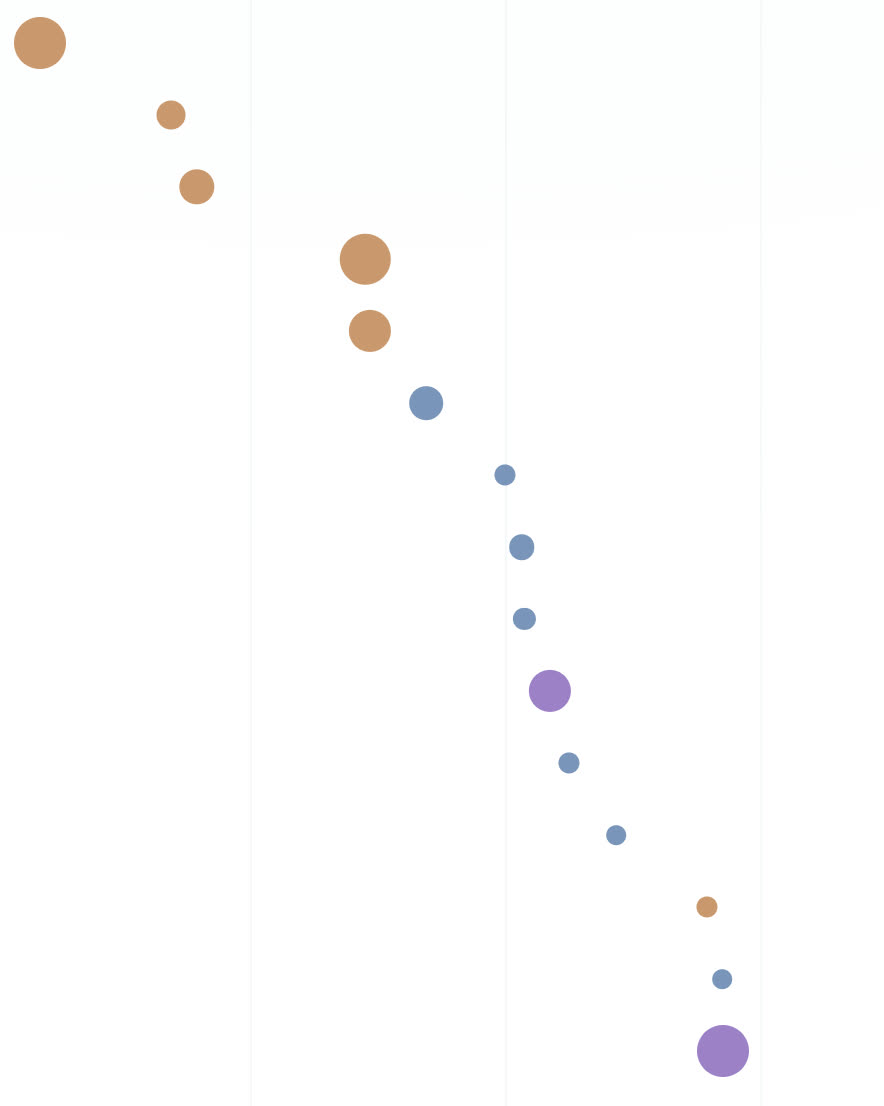
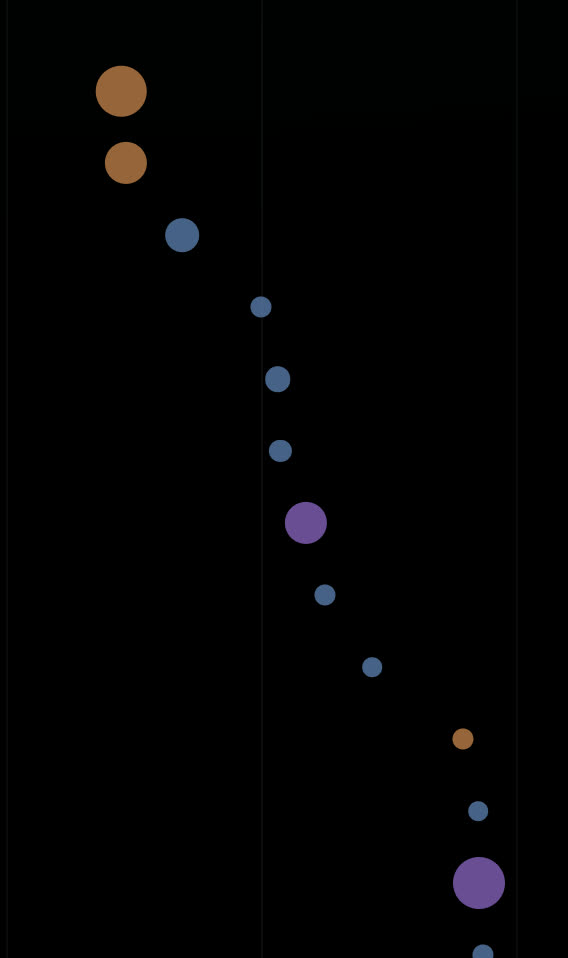
Major, Minor, and other speaking prophets arranged by when they appear in the biblical record.
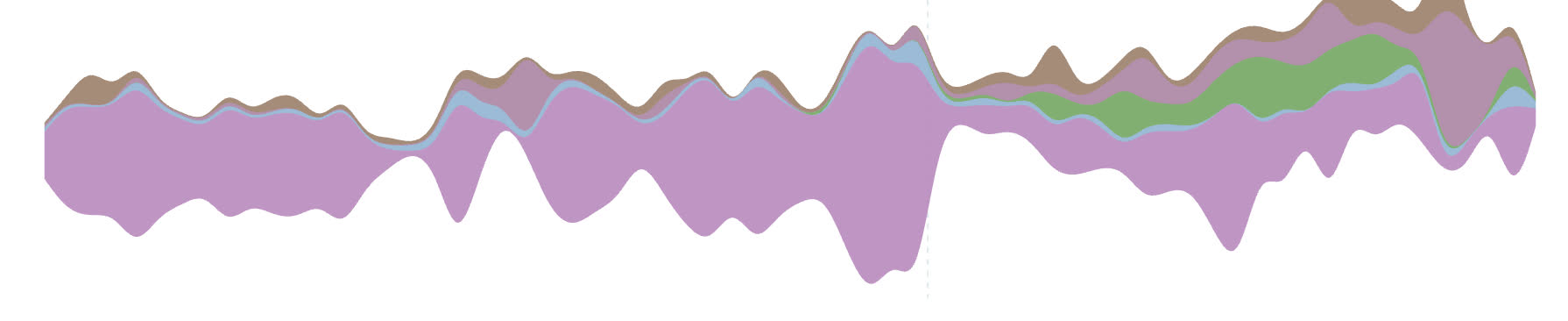
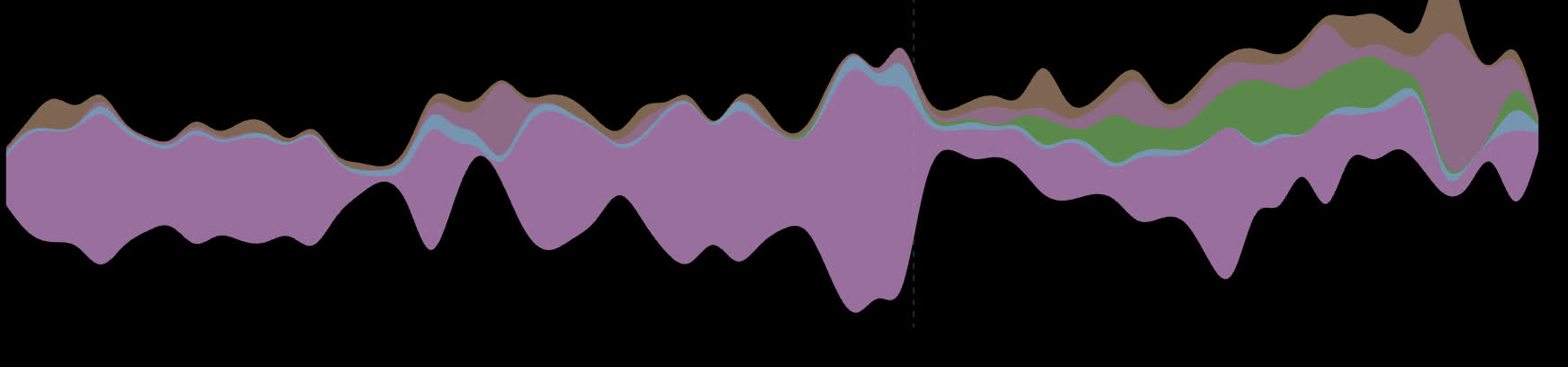
See where important words appear throughout the 66 books of Scripture, from the most common to the rarest.
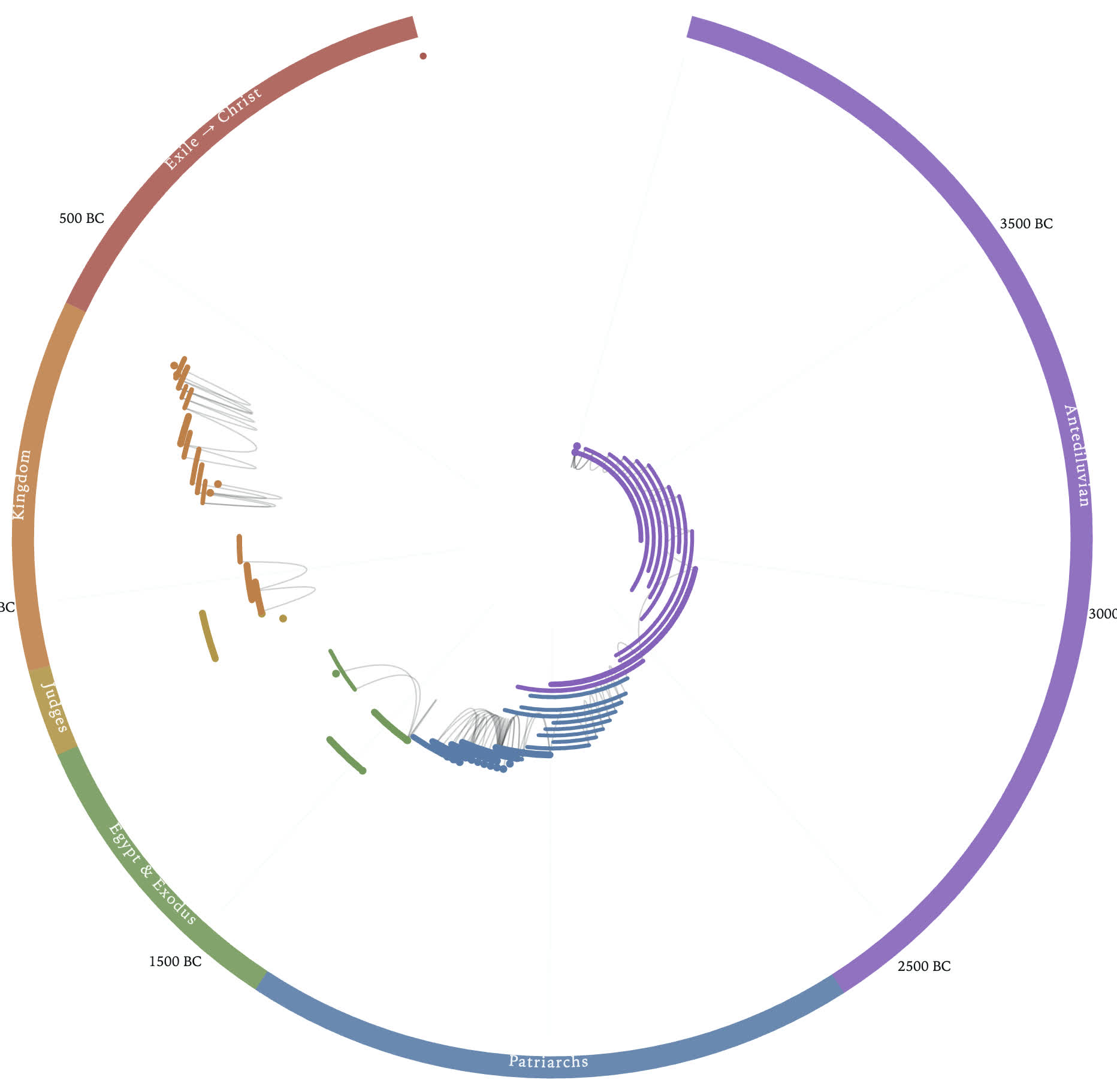
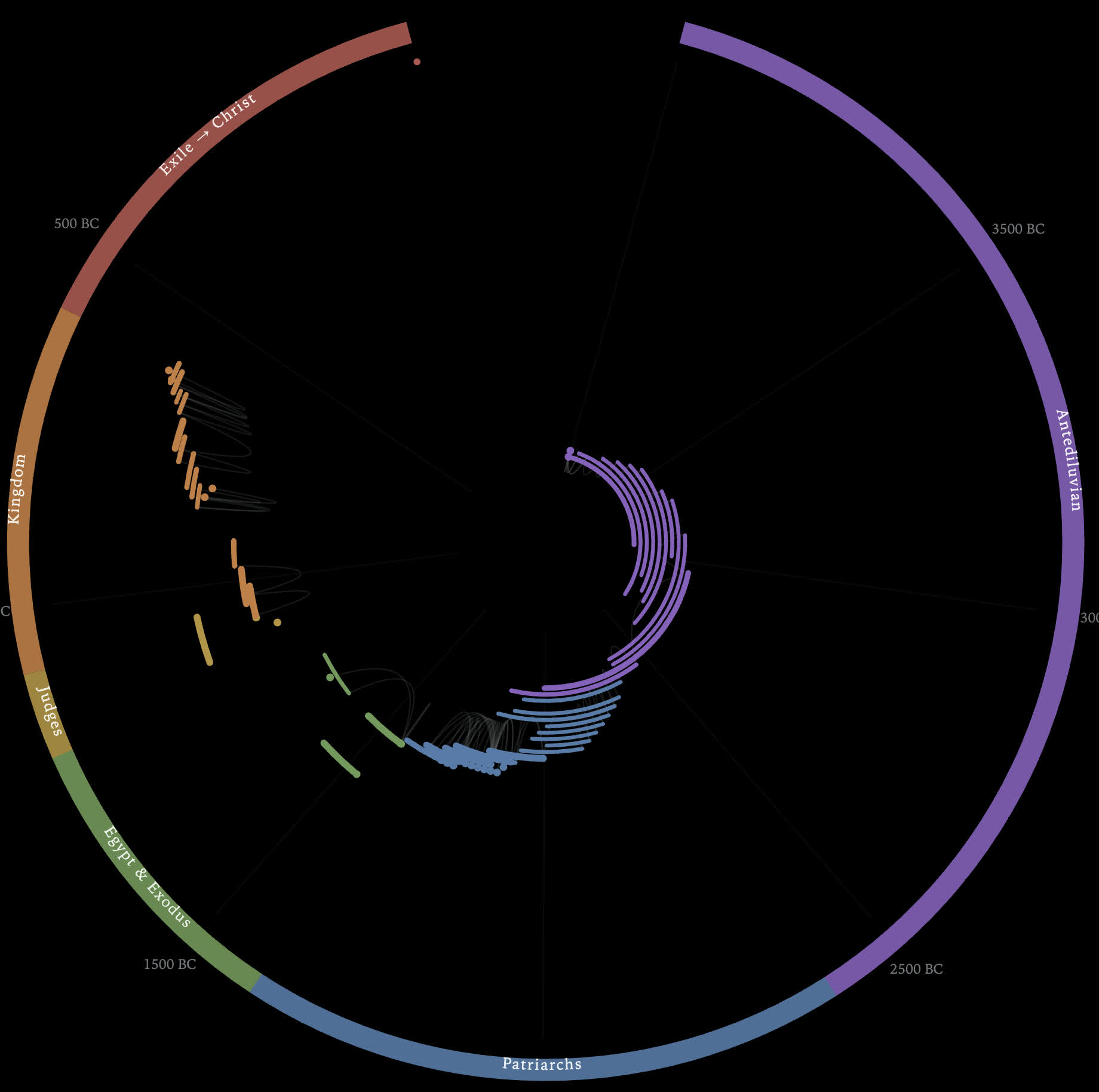
The lifespans of people from Adam to Jesus, showing how long people lived and how those lifespans changed over the generations.
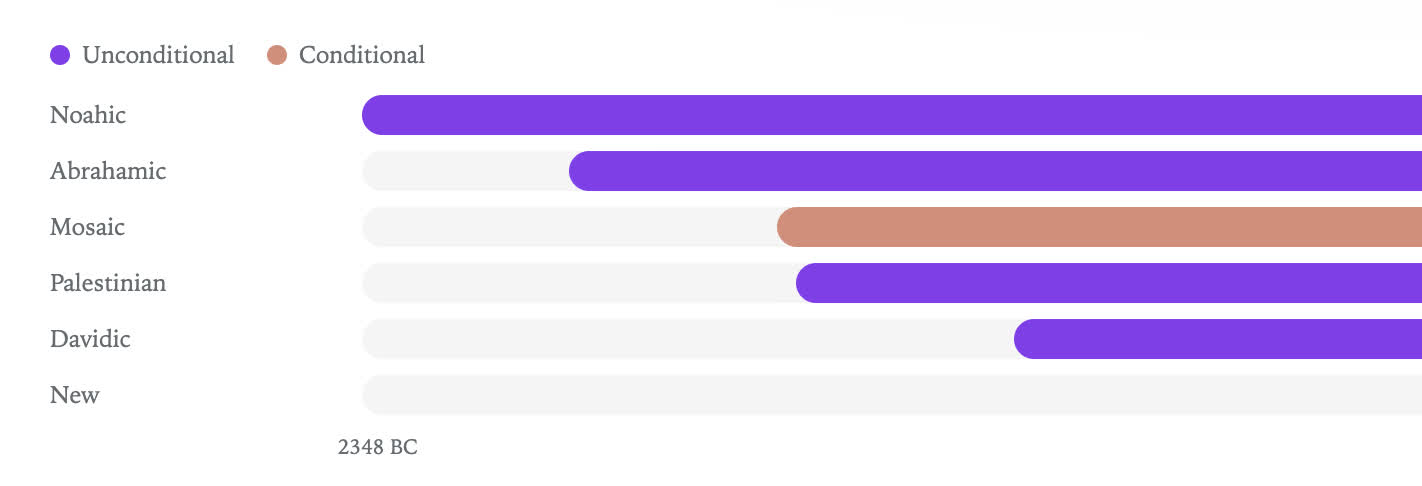
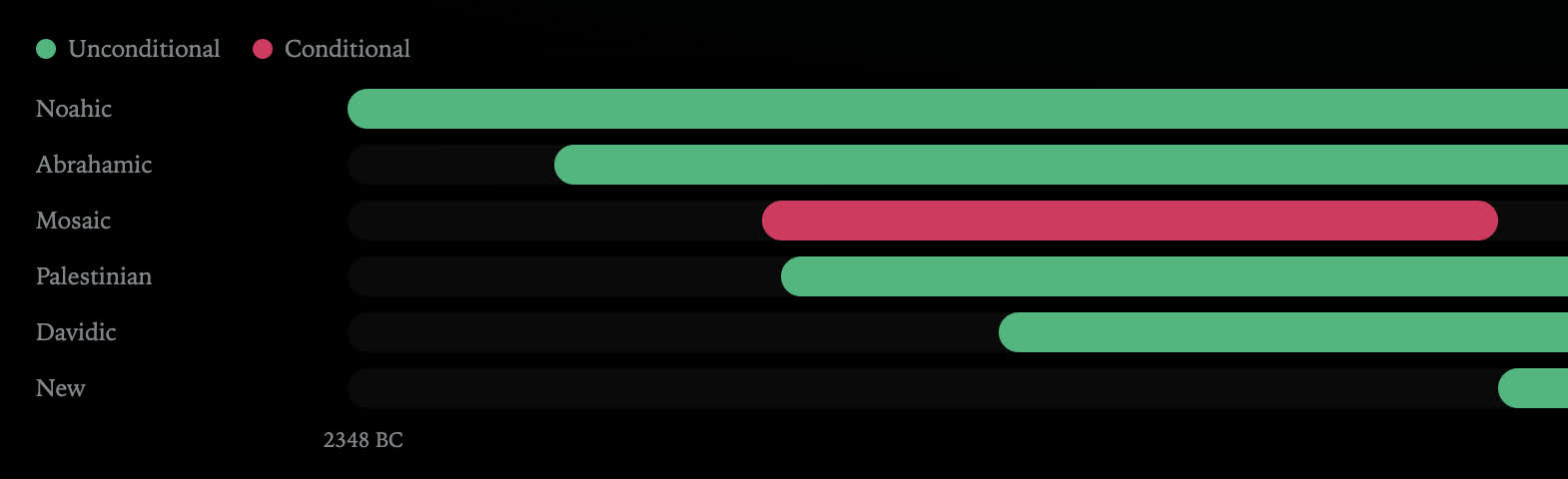
Every covenant God makes in the Old Testament is still open except one — the covenant at Sinai, which came with an expiration date.
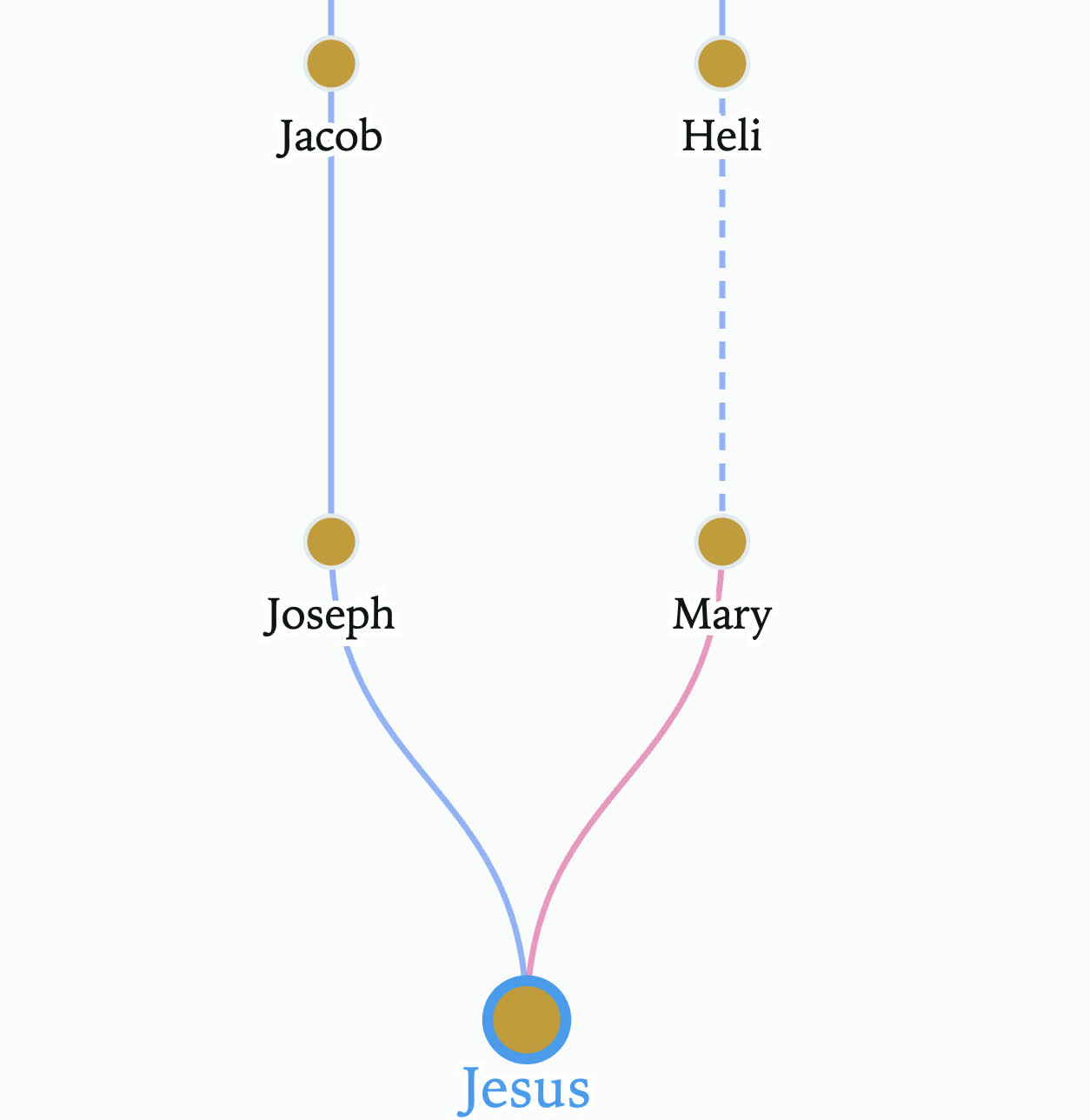
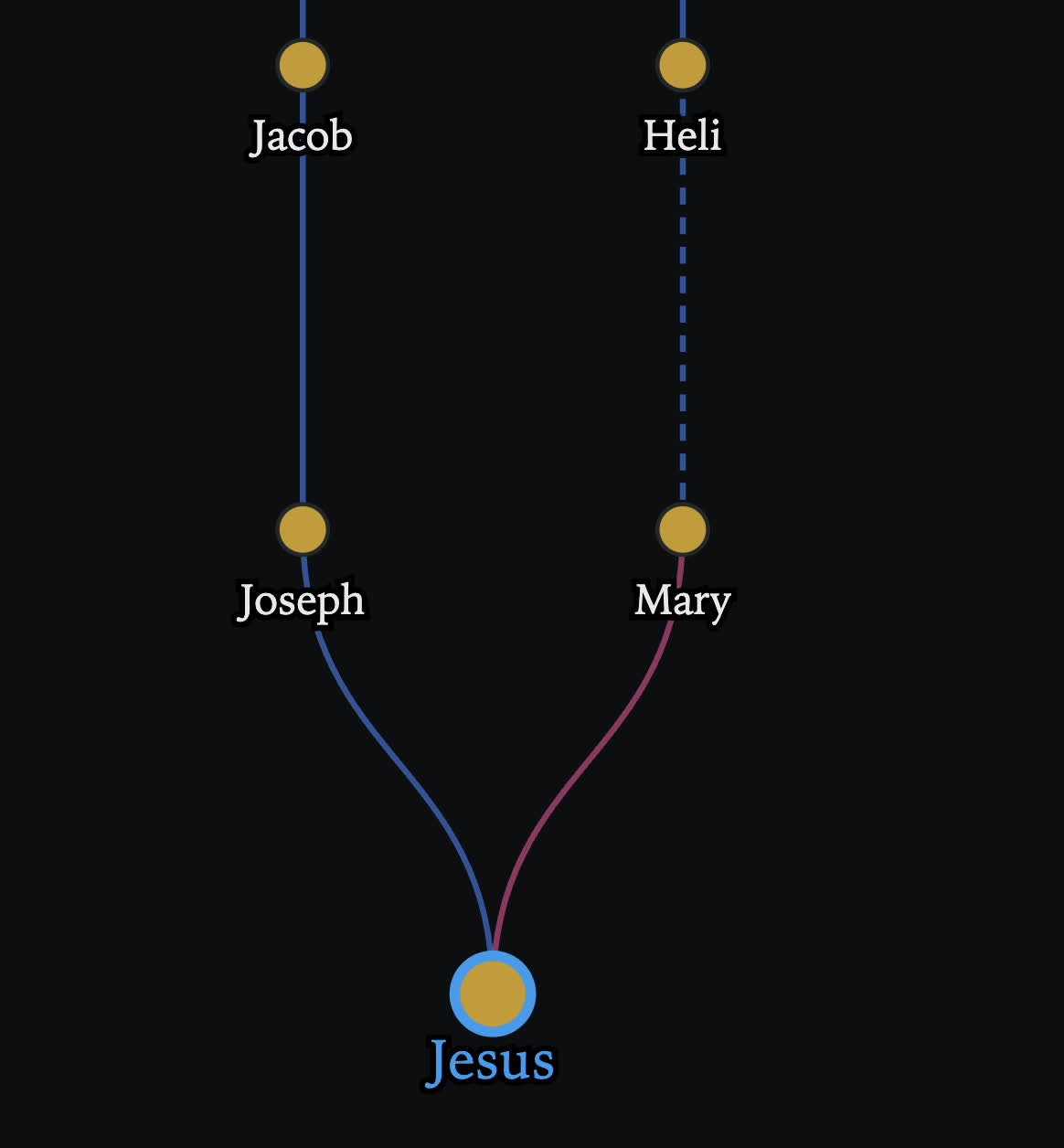
Matthew and Luke trace Jesus' ancestry in different ways. Compare both genealogies in one family tree with their source passages.
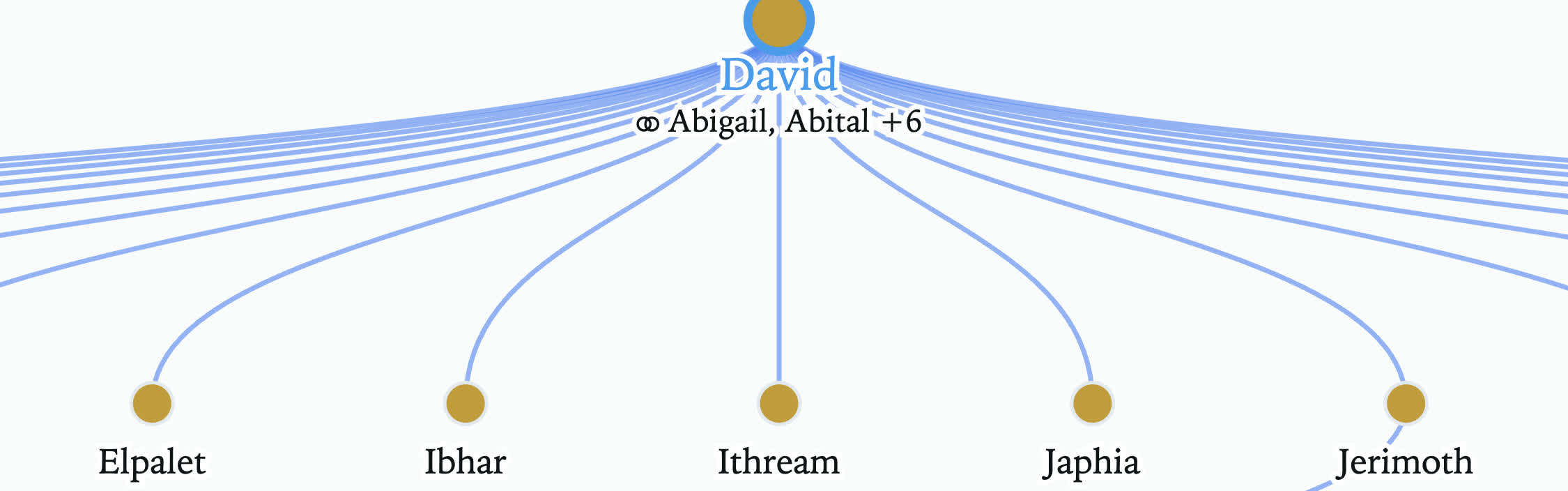
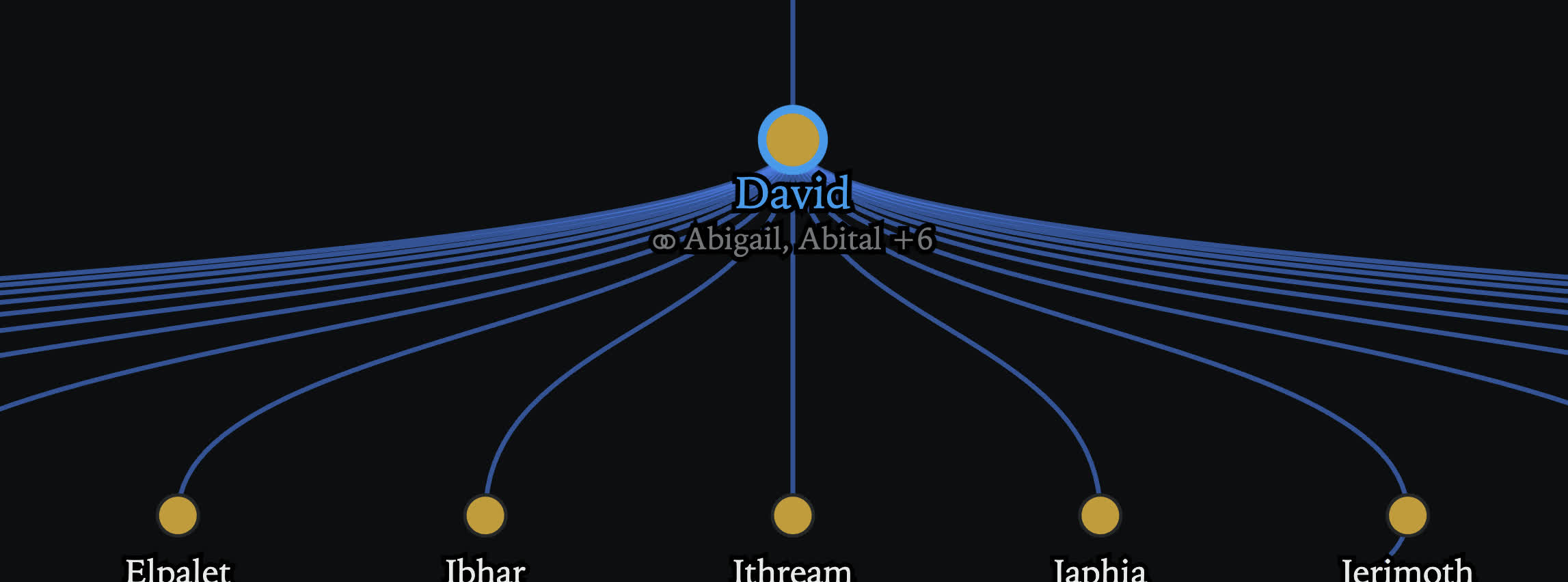
David's family line from Judah and Ruth through David and Solomon and the kings of Judah.
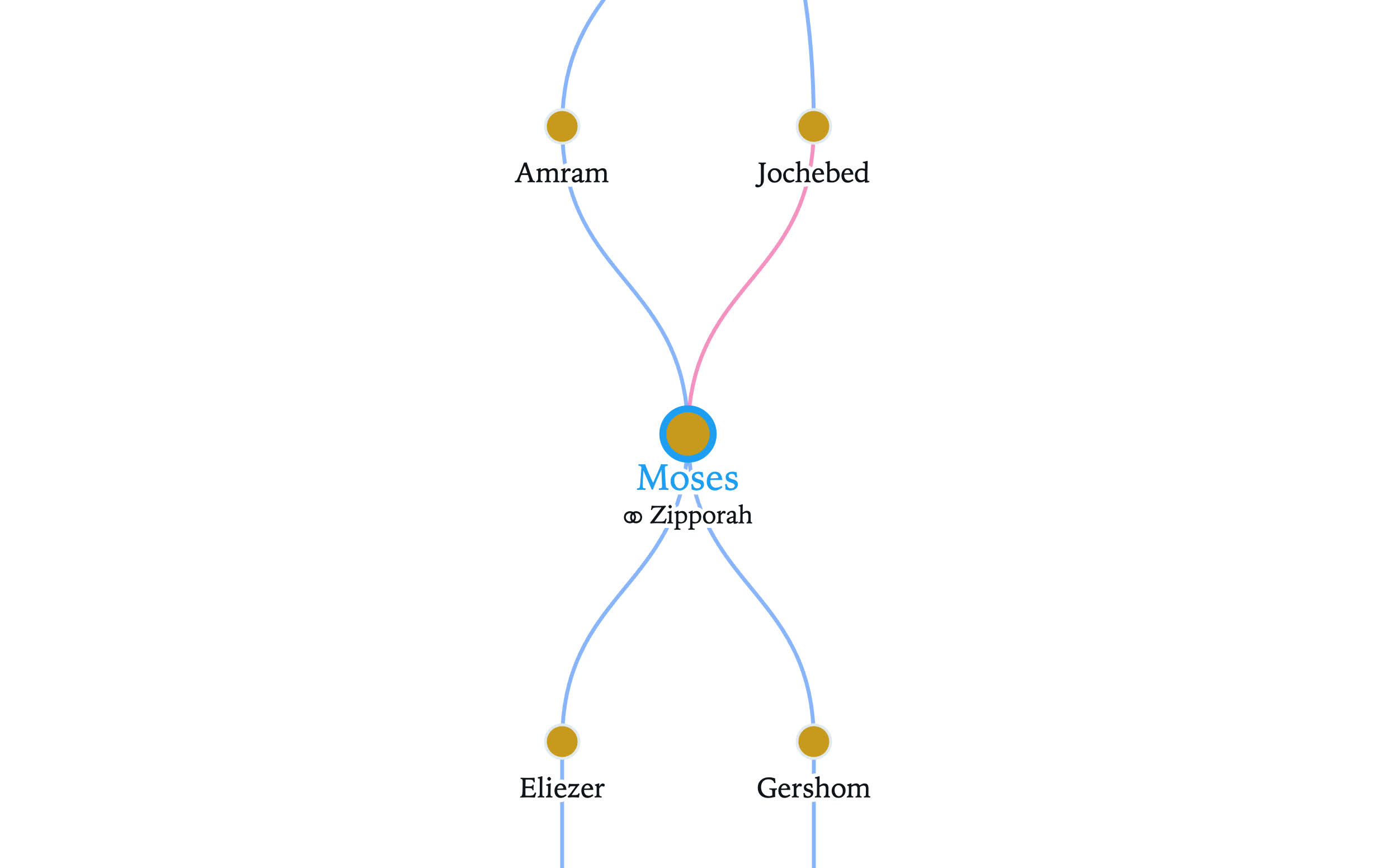
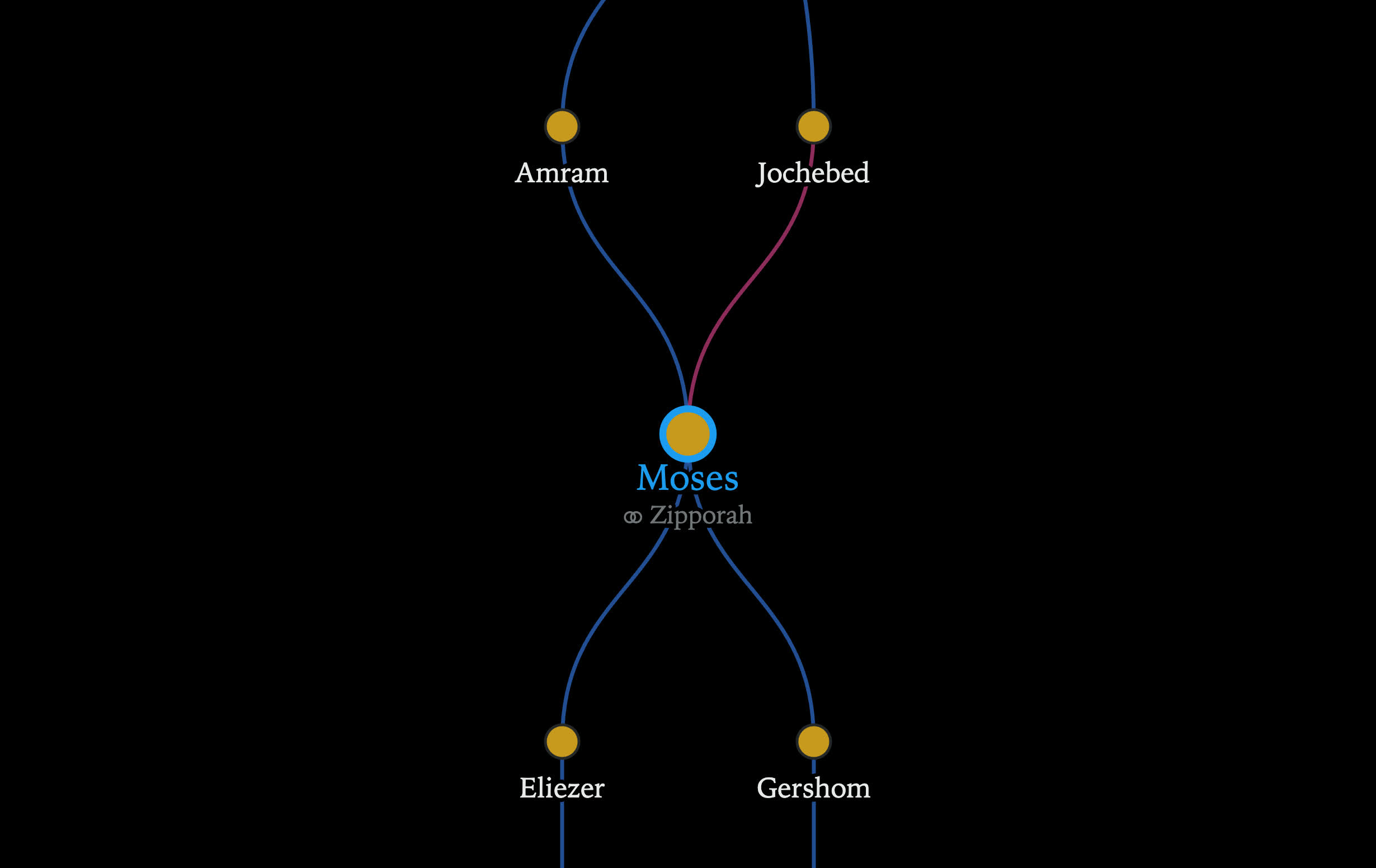
The family line of Levi through Moses and Aaron, based on the genealogy in Exodus 6.
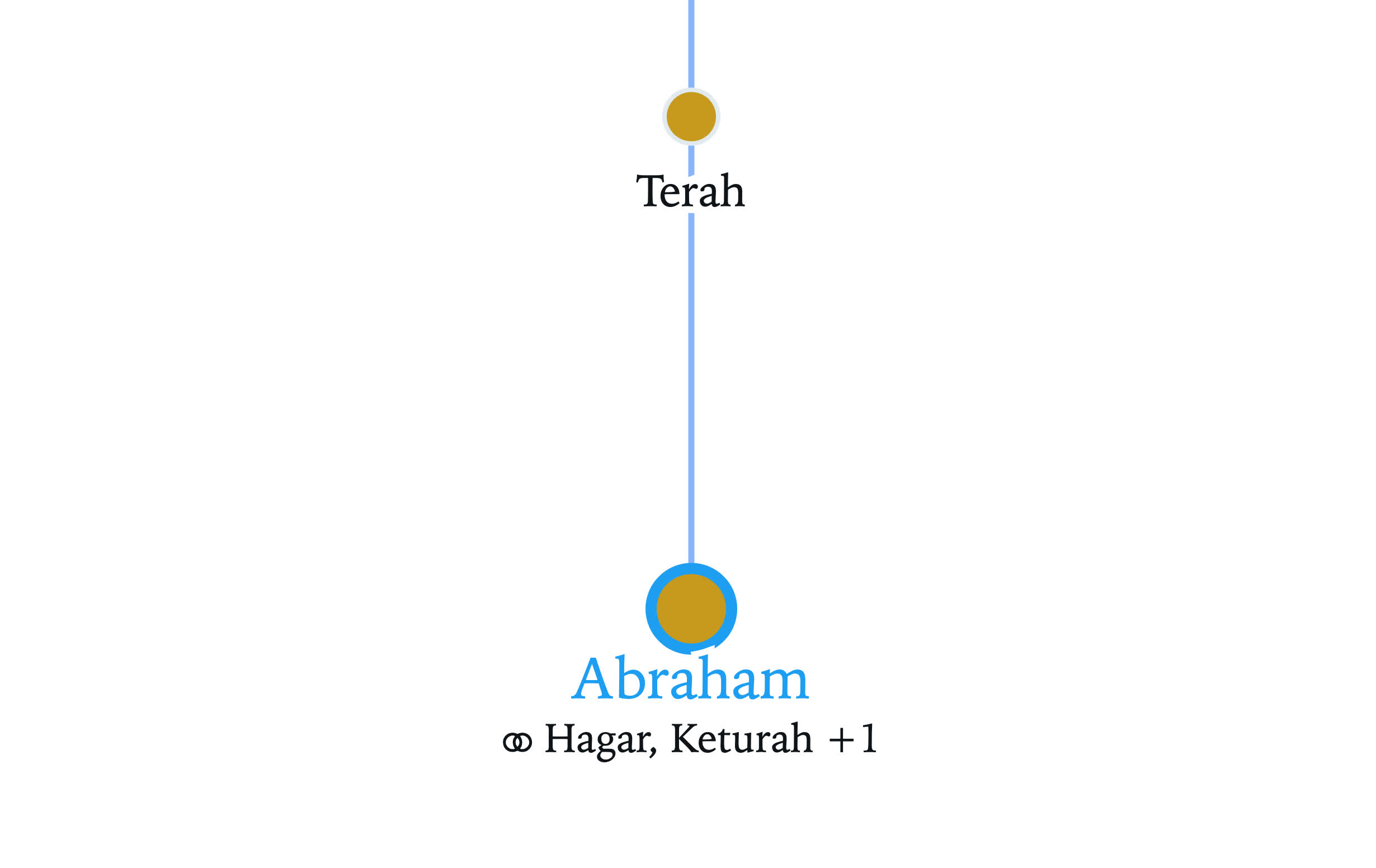
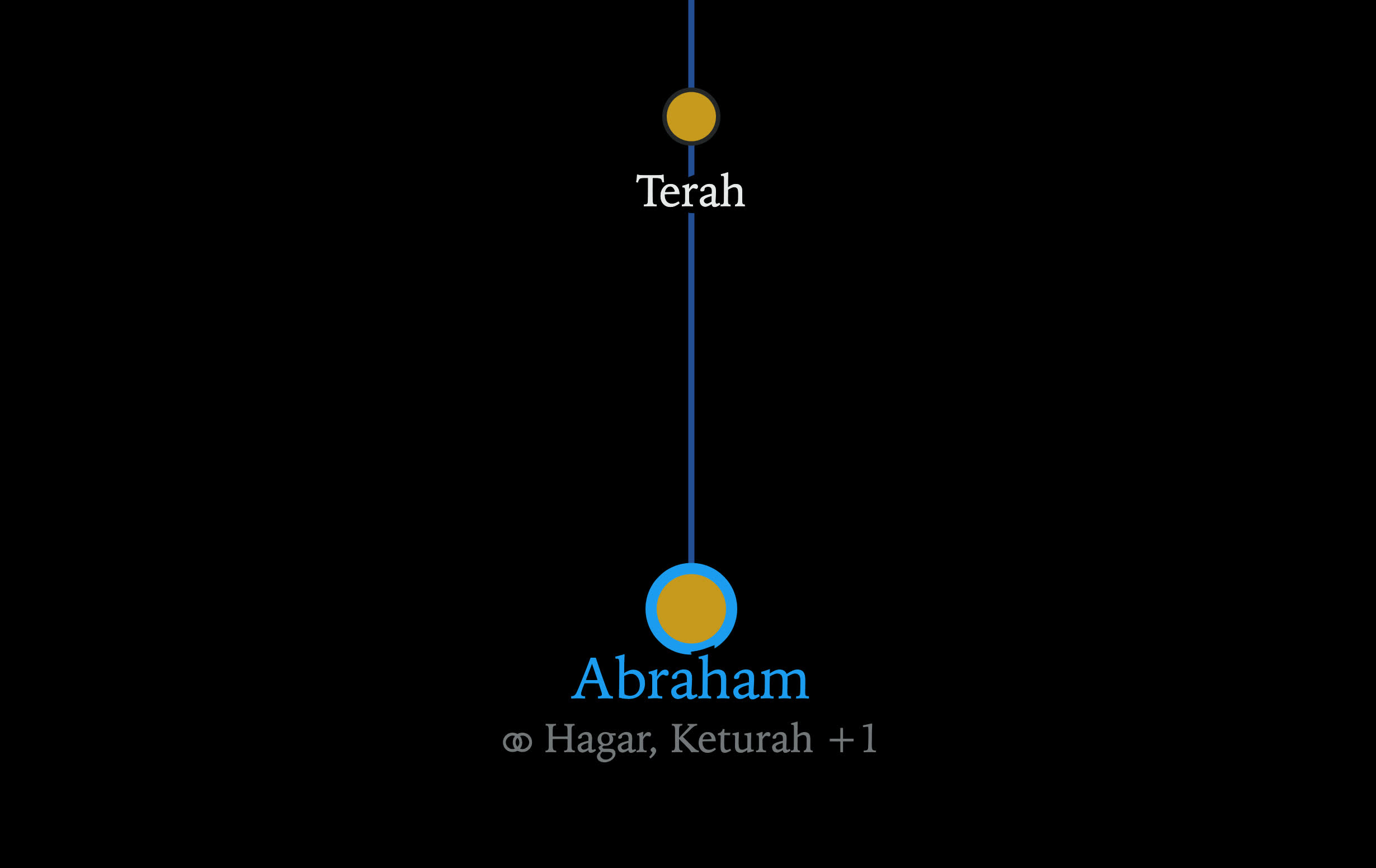
Abraham's ancestry from Shem back to Adam, following the genealogies in Genesis 5 and 11.
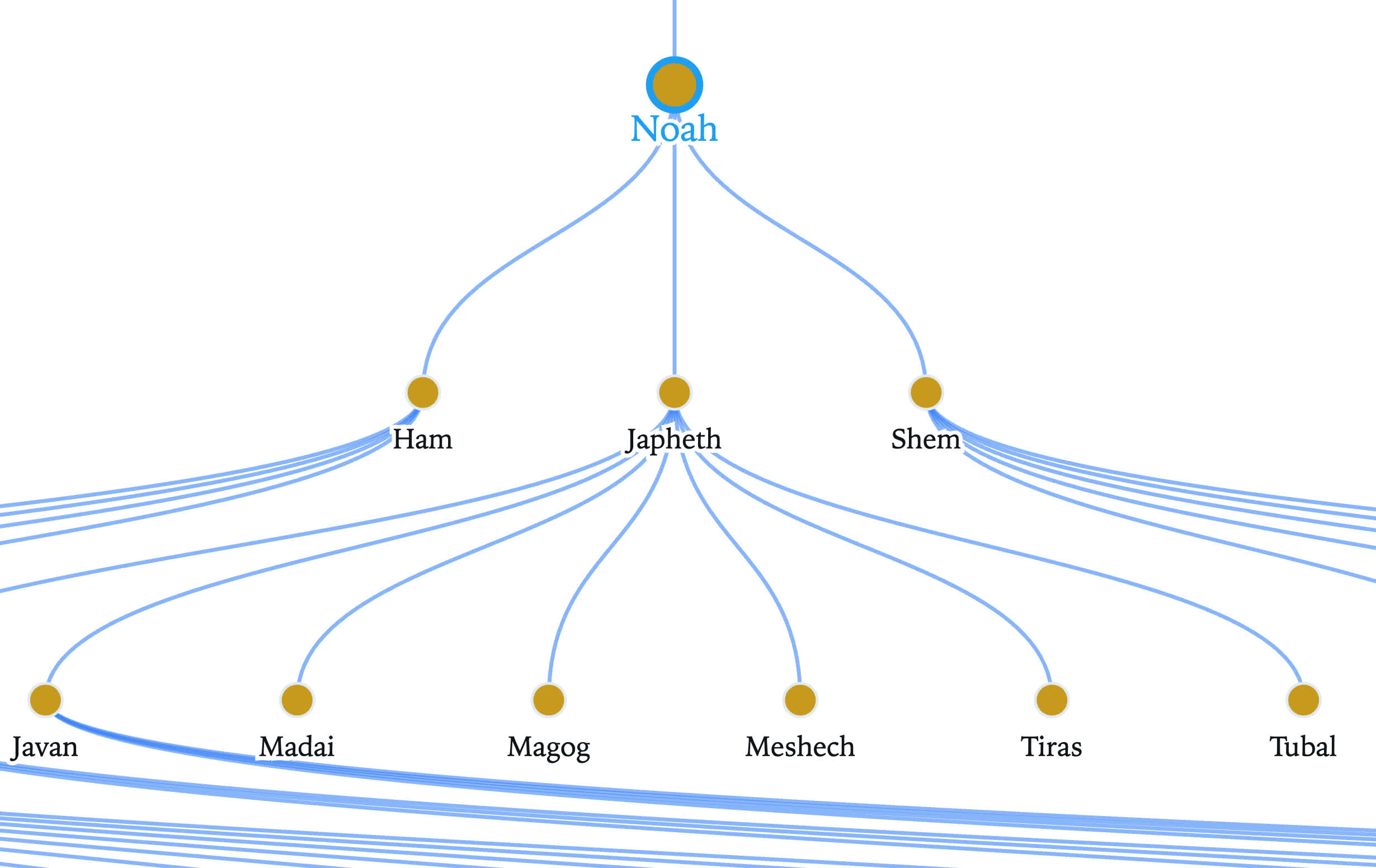
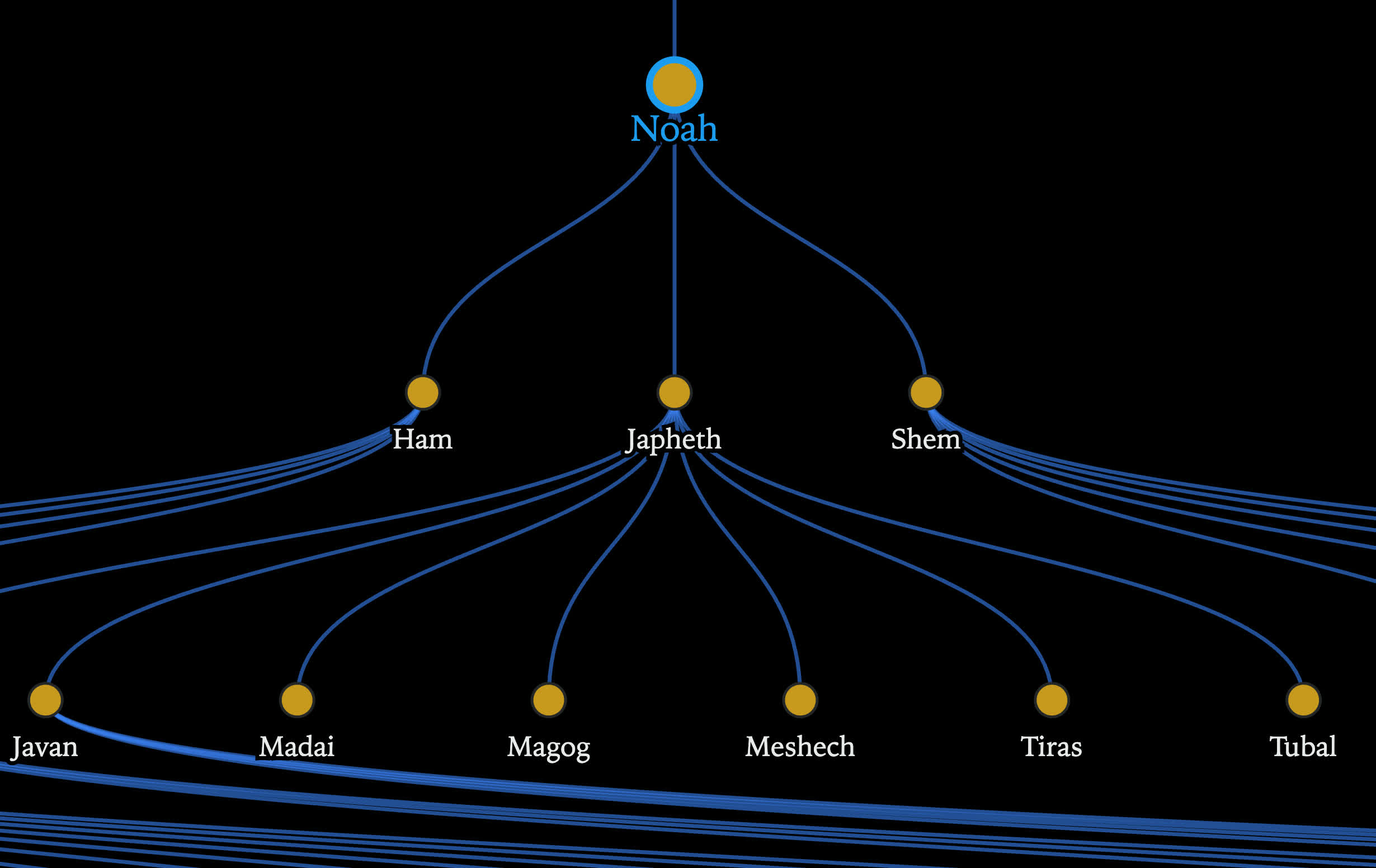
The descendants of Noah's sons Shem, Ham, and Japheth and the nations listed in Genesis 10.
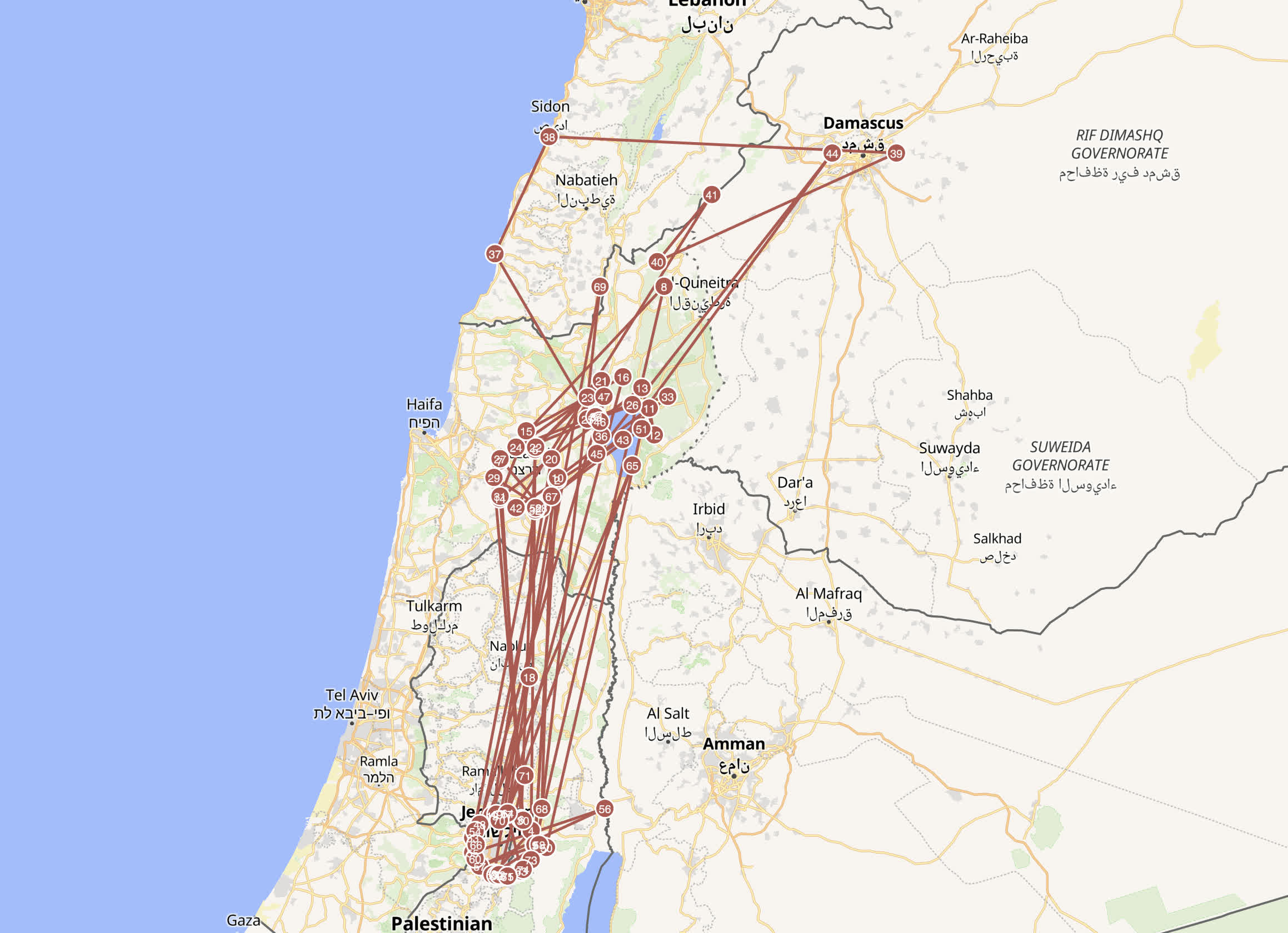
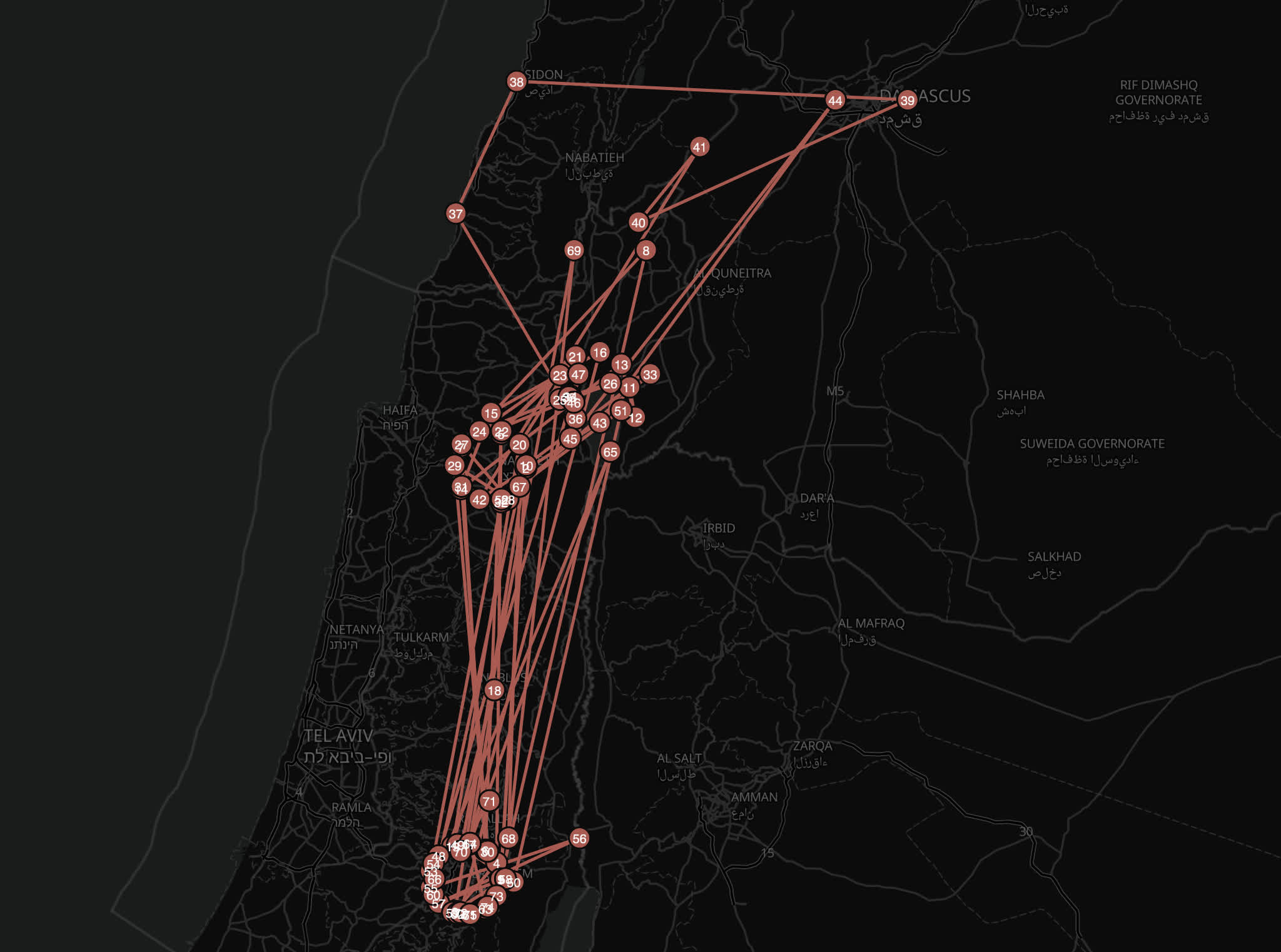
The places connected with Jesus' earthly ministry, from Bethlehem to Jerusalem.
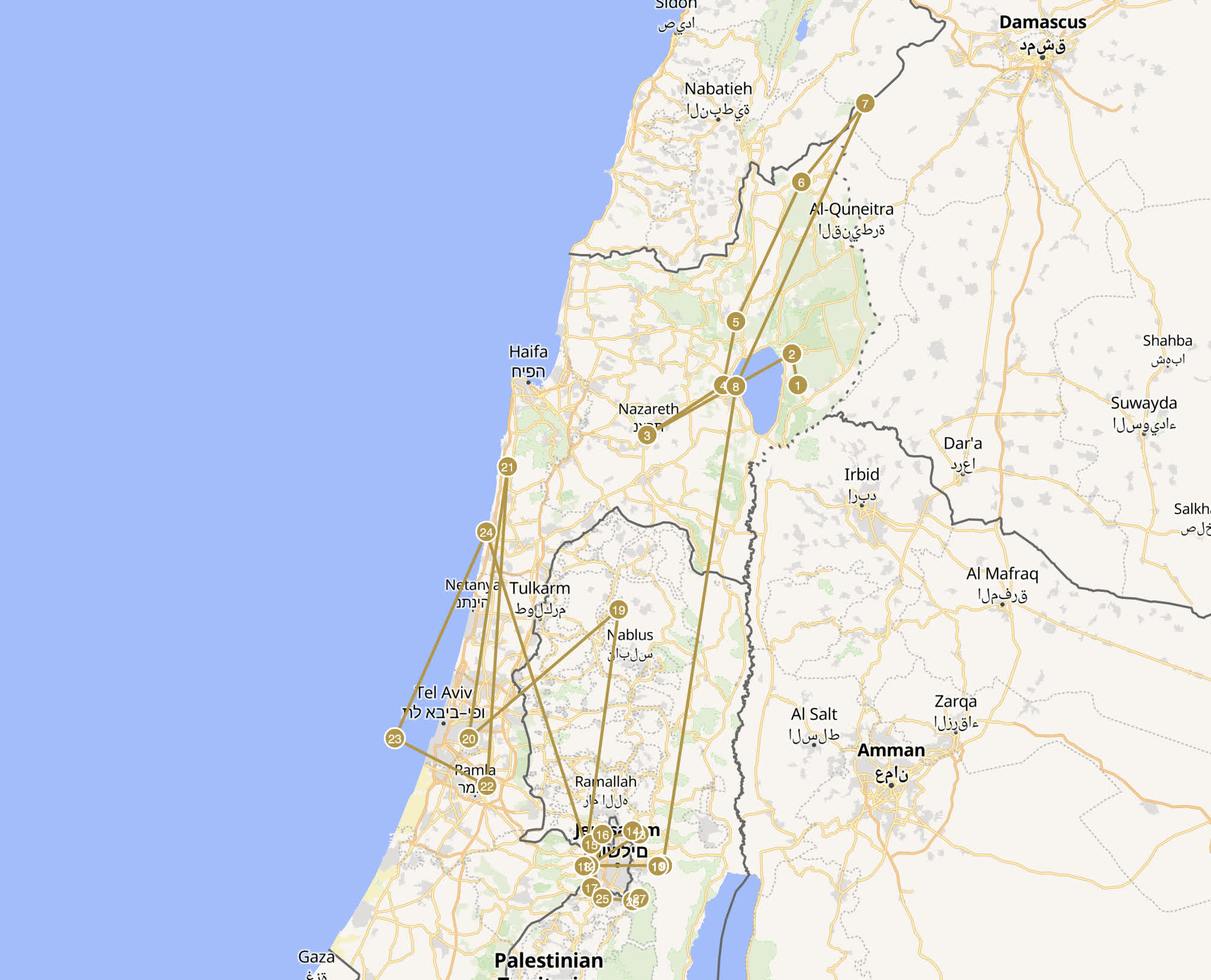
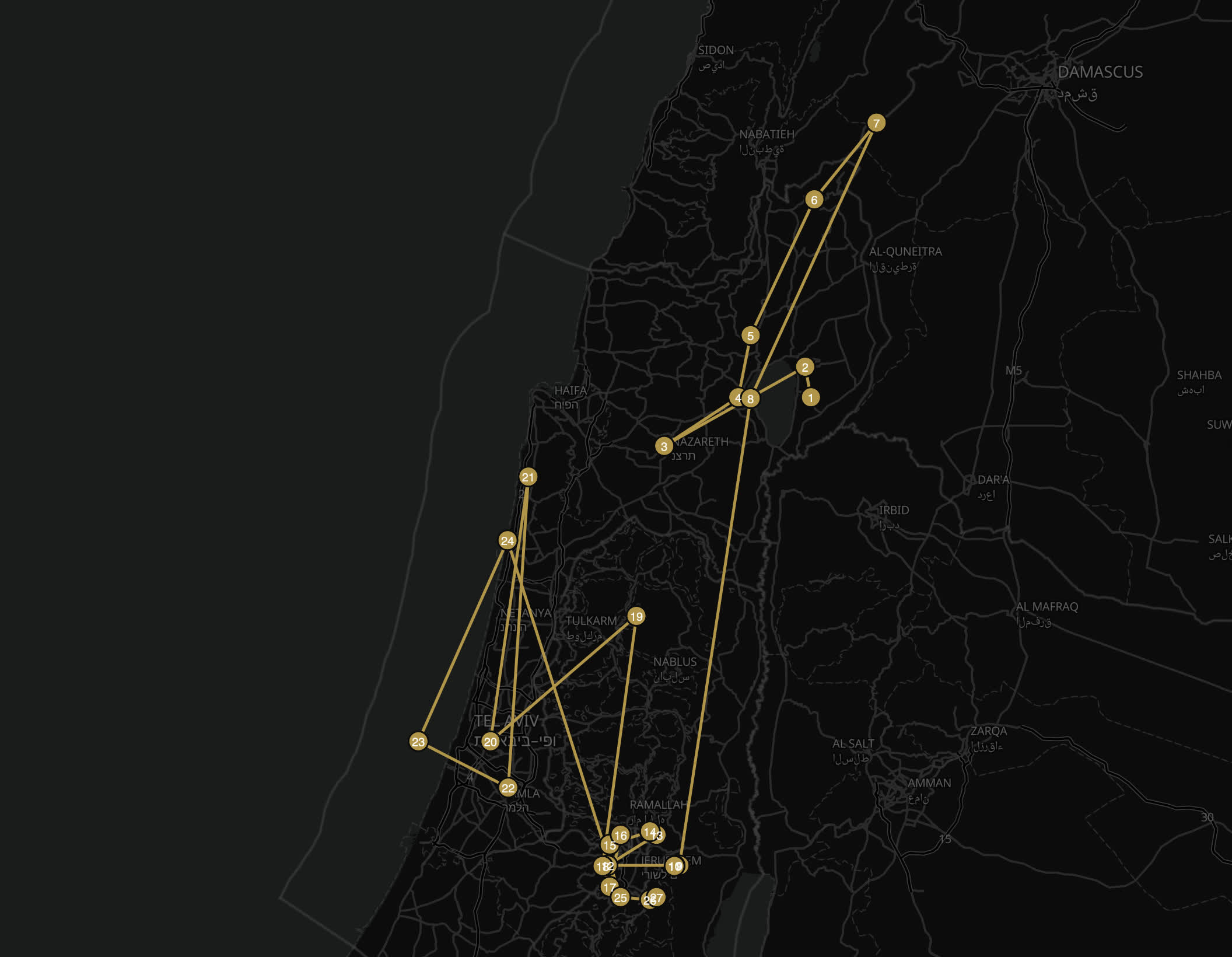
Peter's ministry from Pentecost through the growth of the early church and the Jerusalem Council.
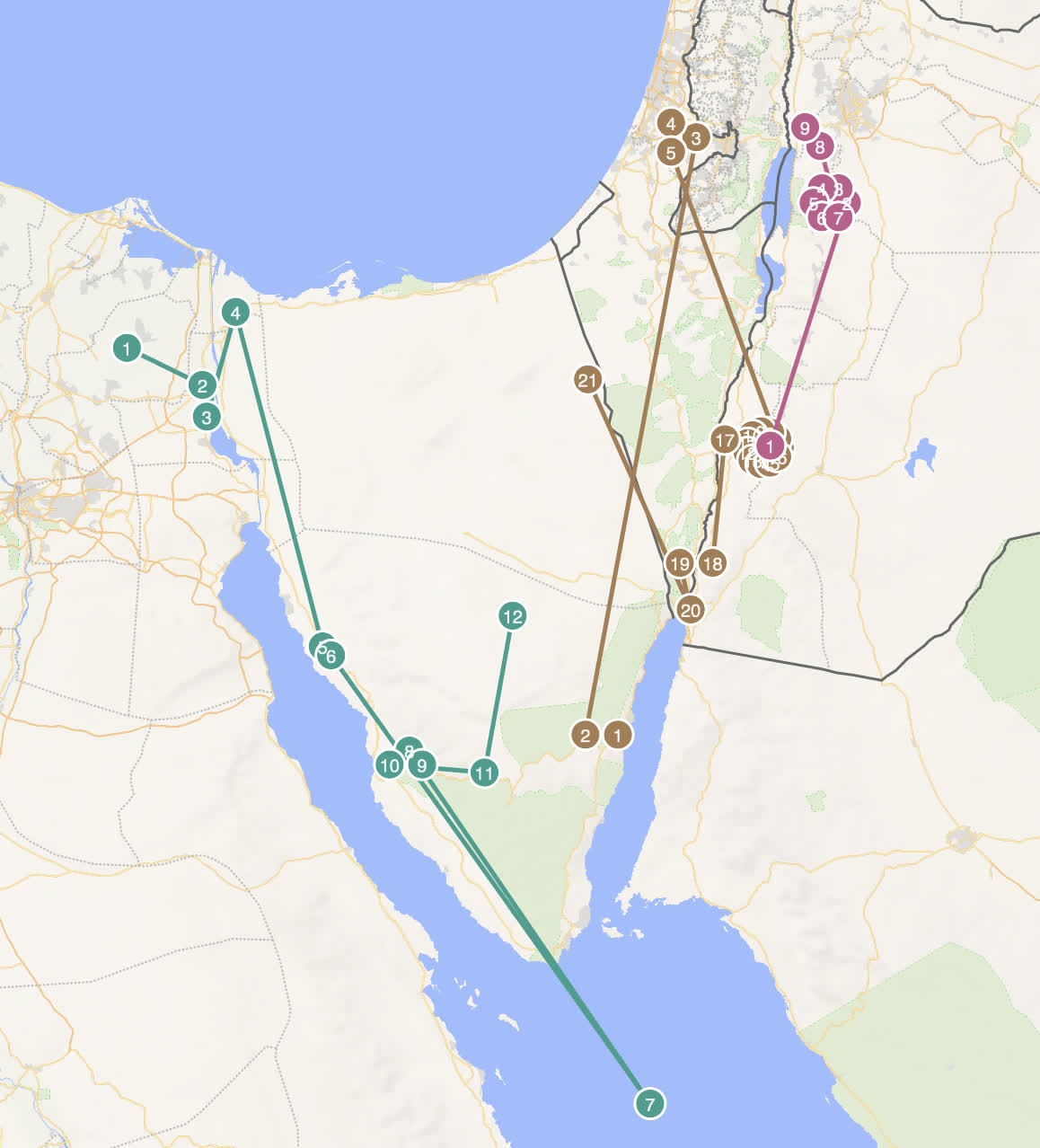
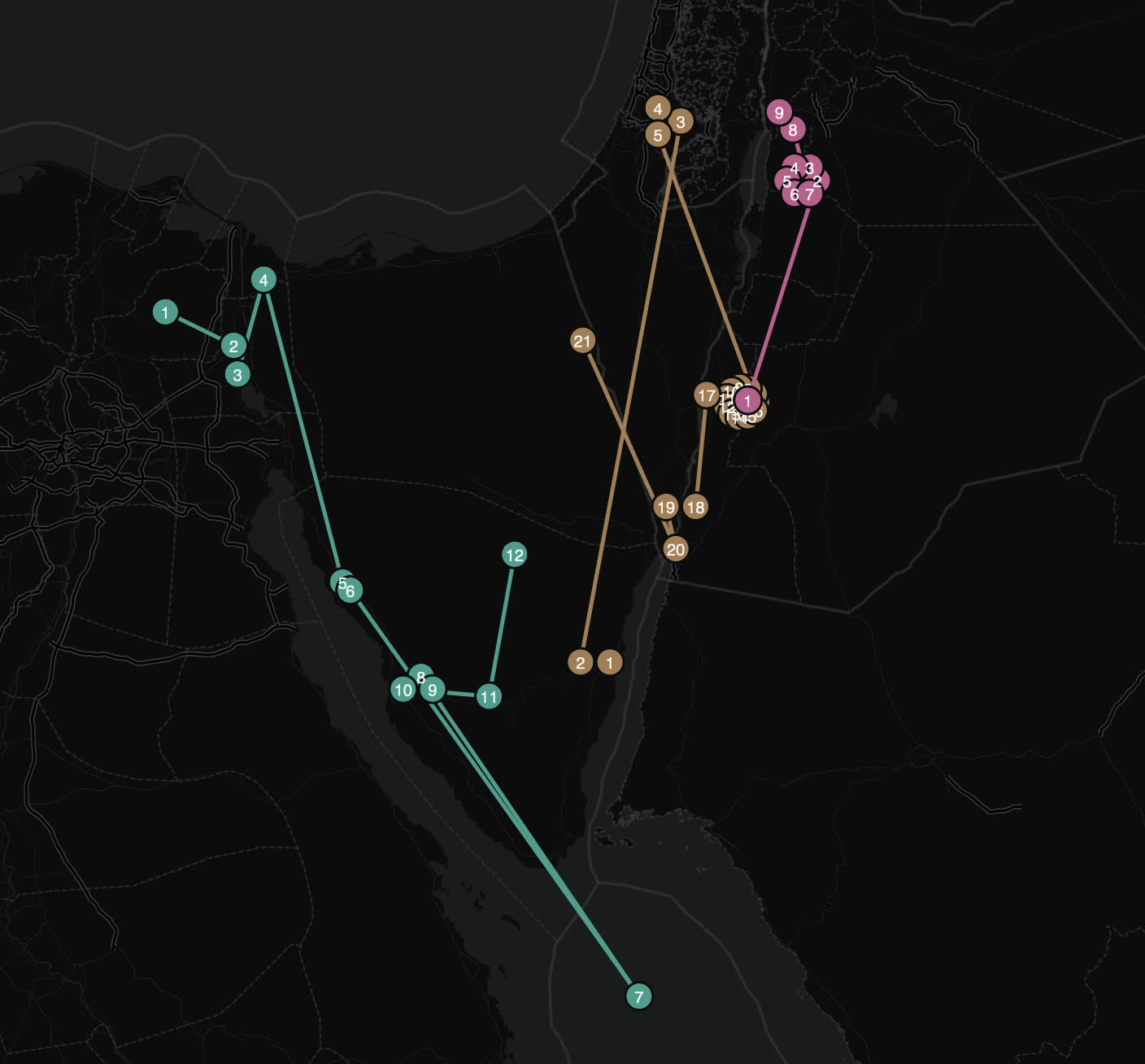
The 42 stations listed in Numbers 33, from Rameses to the plains of Moab across 40 years in the wilderness.
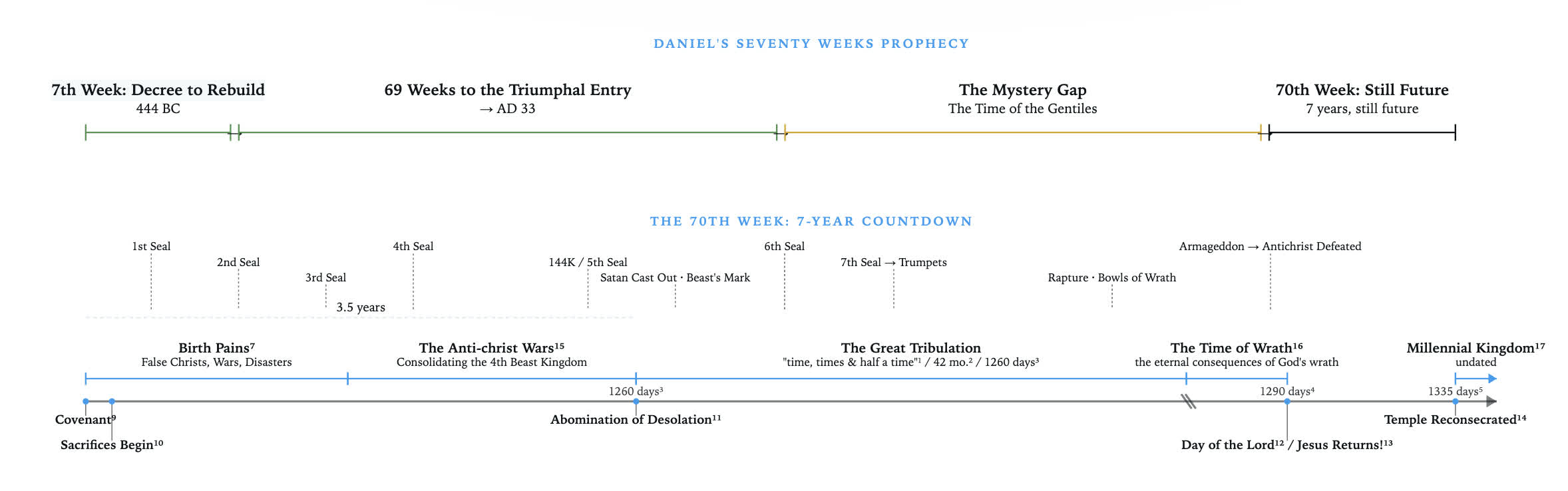
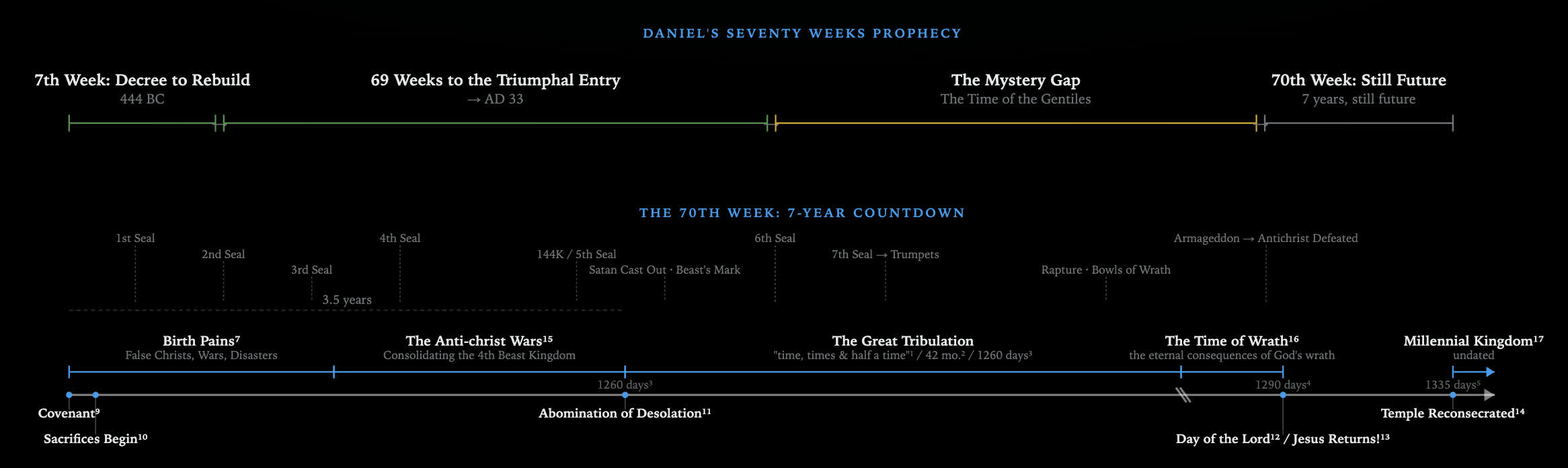
A timeline connecting Revelation's seals, trumpets, and bowls with Daniel's Seventy Weeks and the return of Christ.
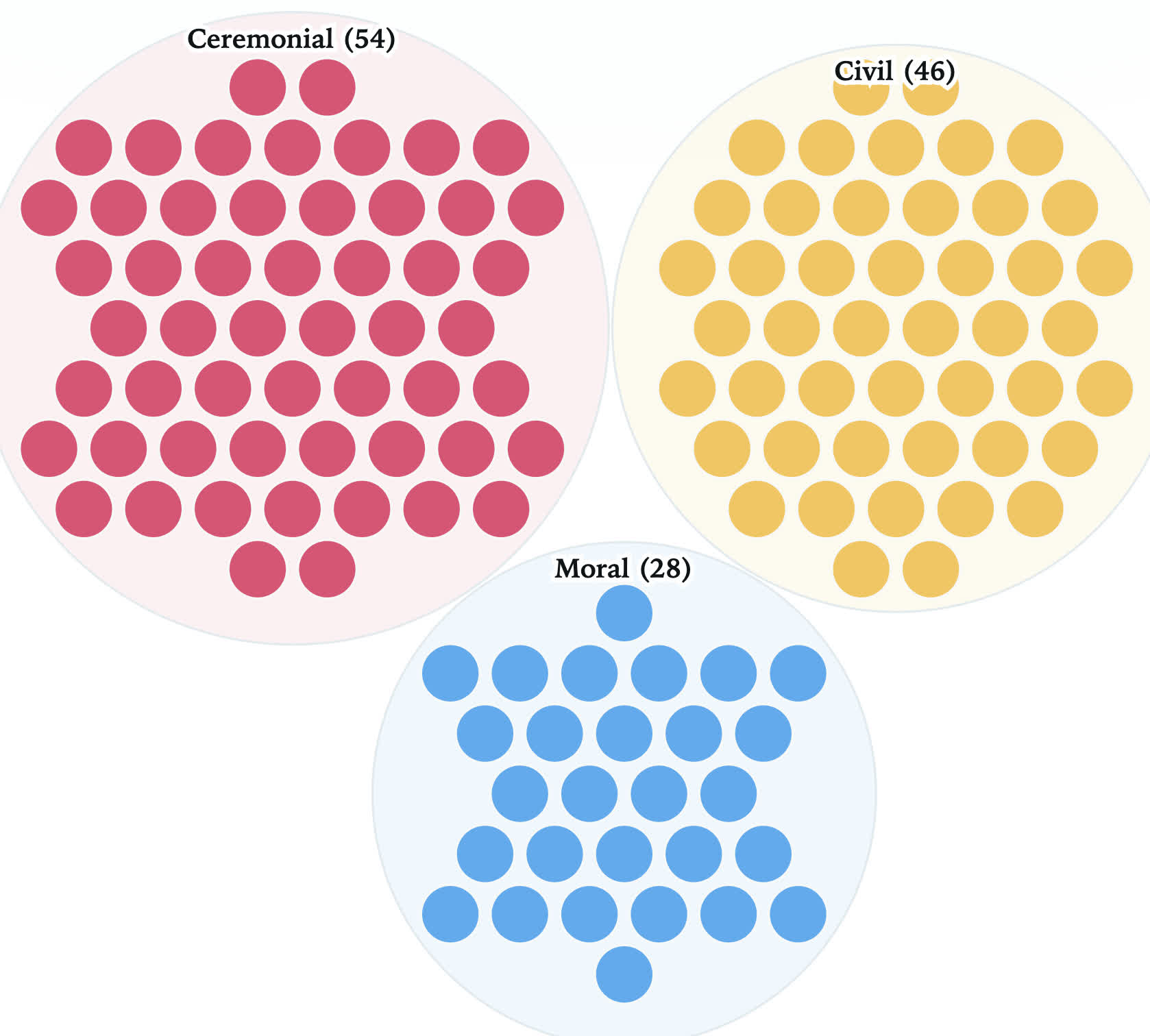
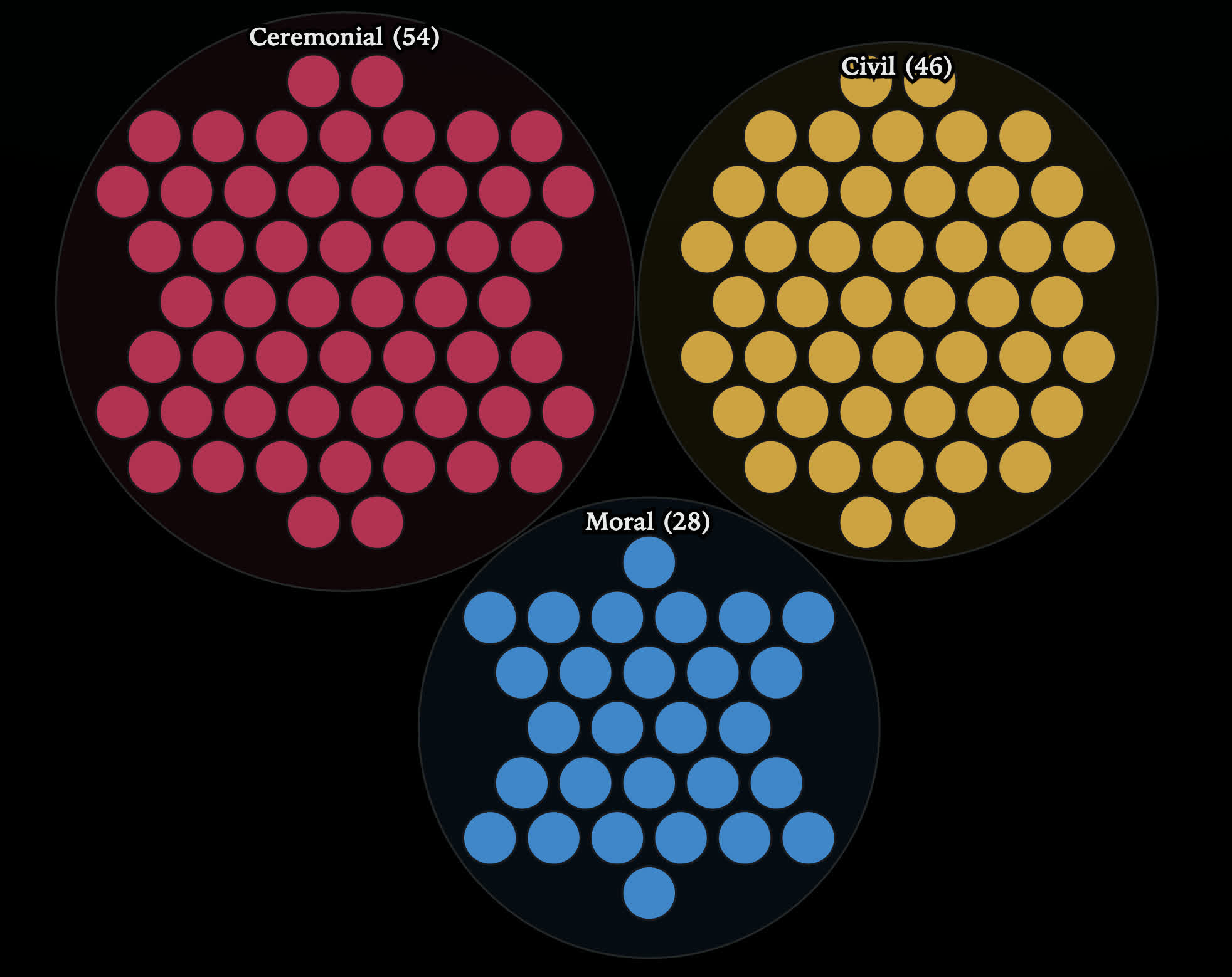
The laws in Exodus, Leviticus, Numbers, and Deuteronomy organized by moral, civil, and ceremonial division or by subject.
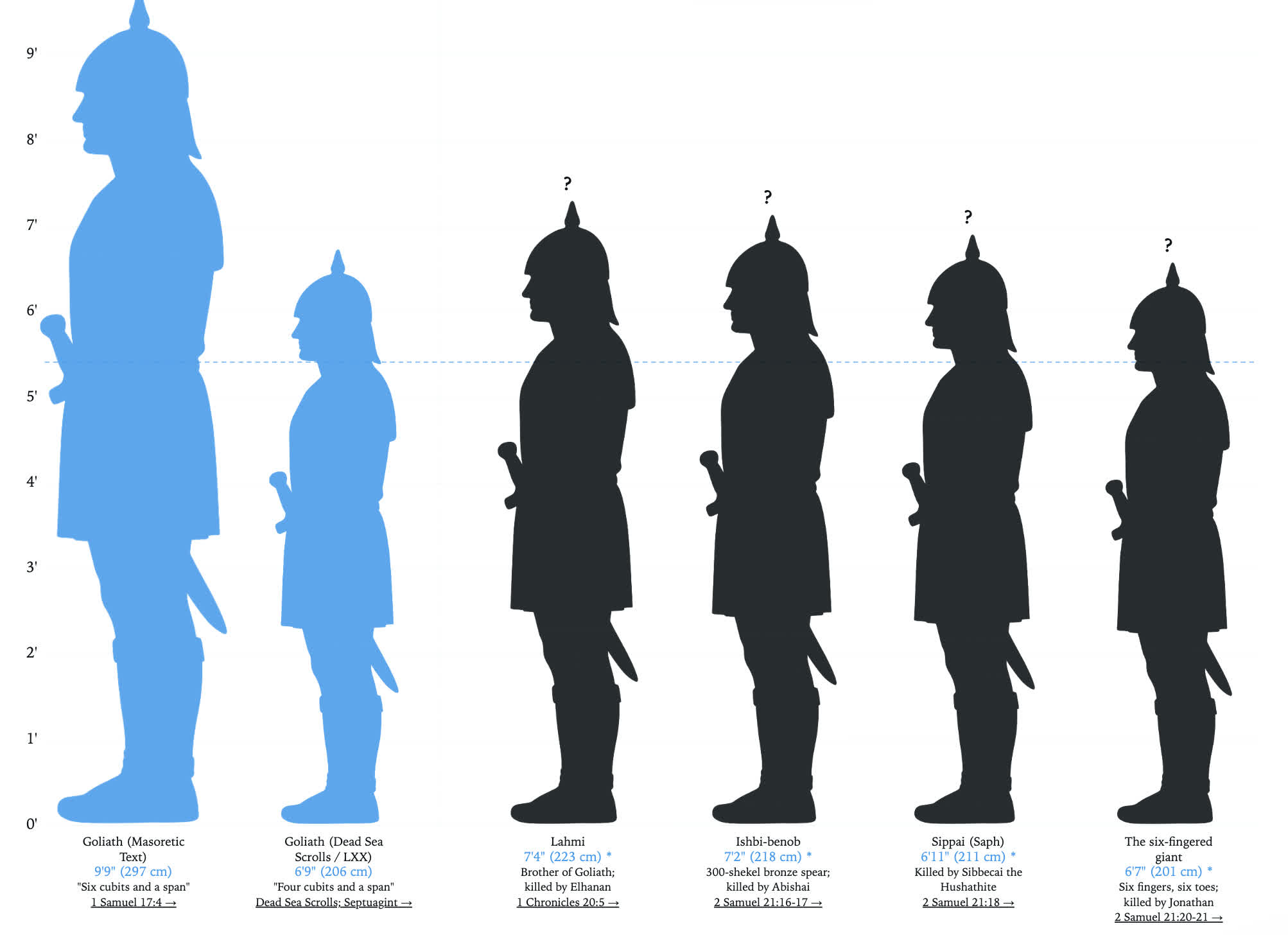
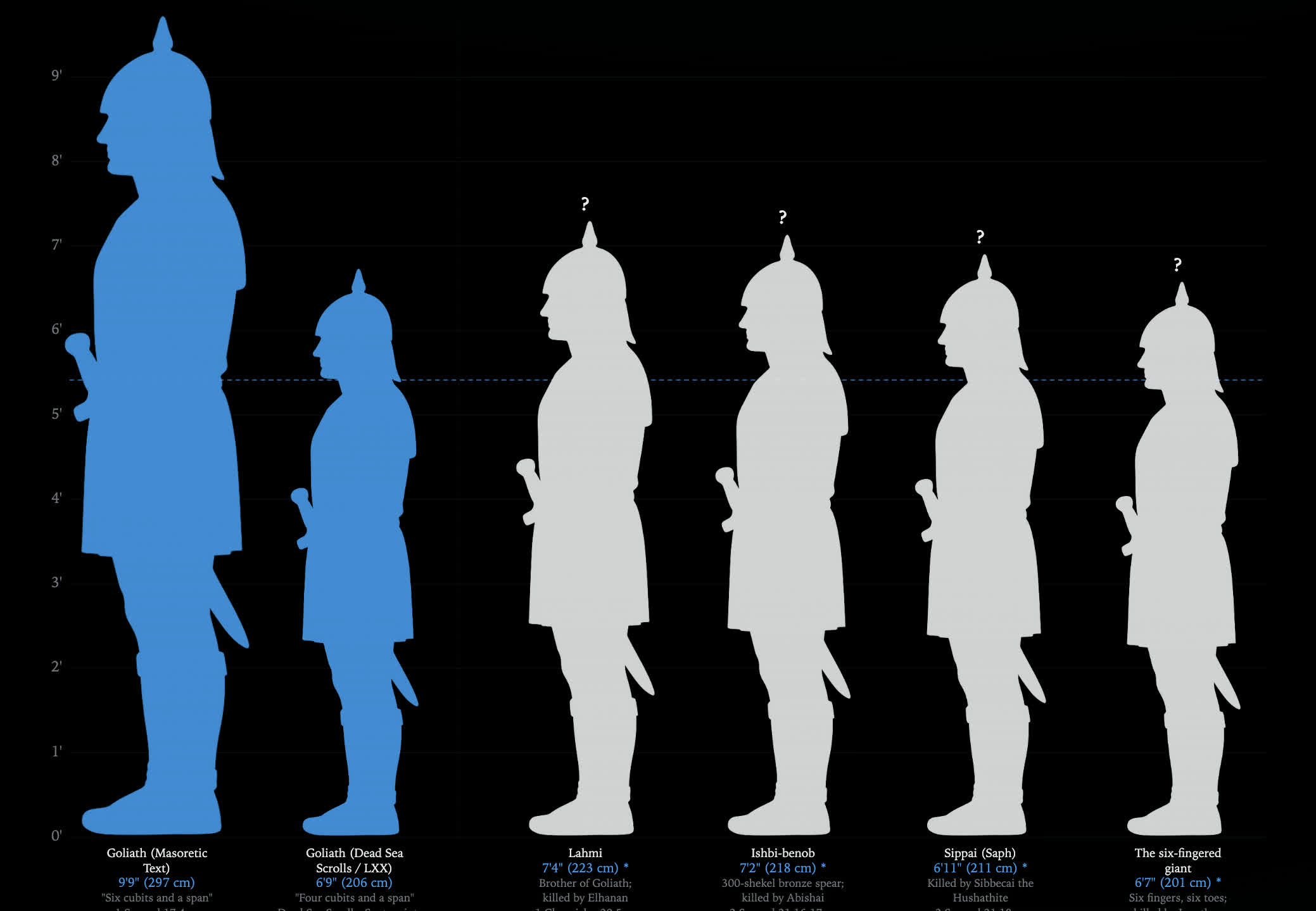
Compare Goliath's height under the Masoretic Text and Dead Sea Scrolls / Septuagint readings, alongside the other giants of Gath.
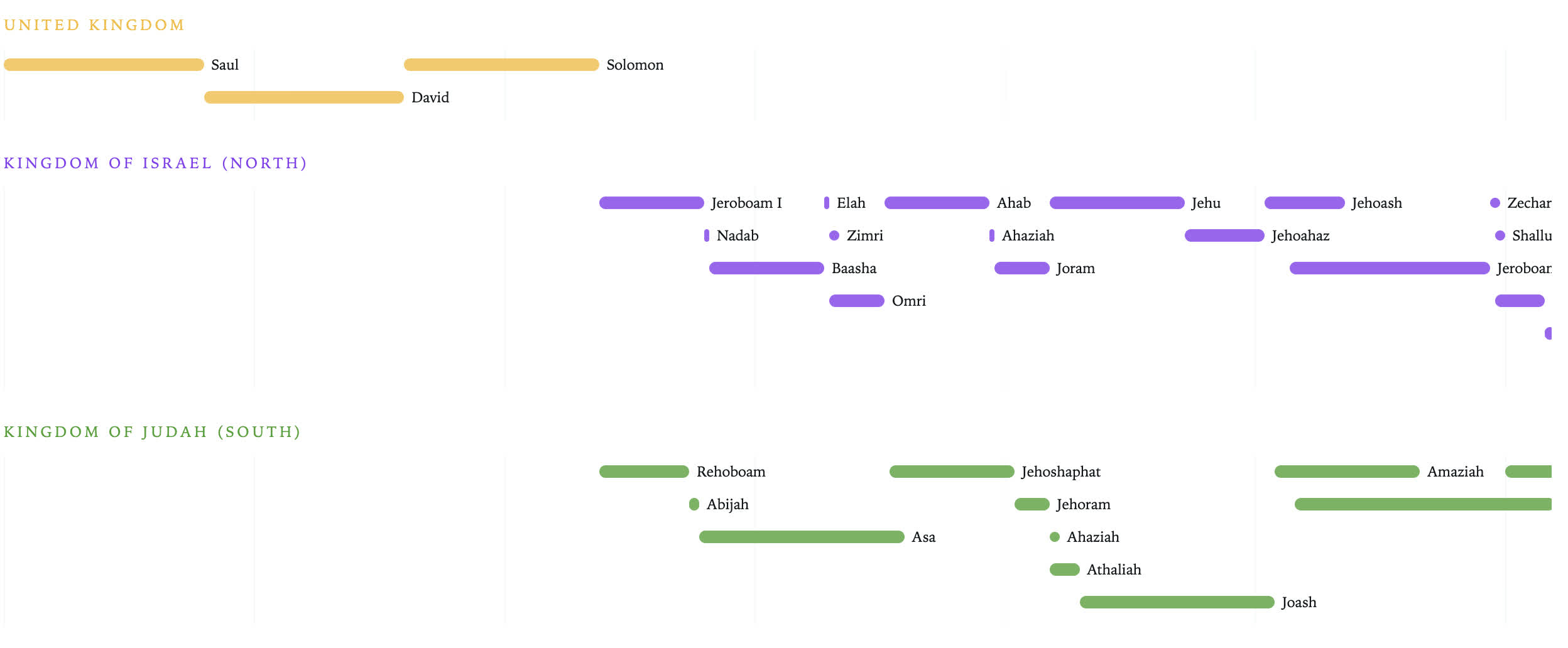
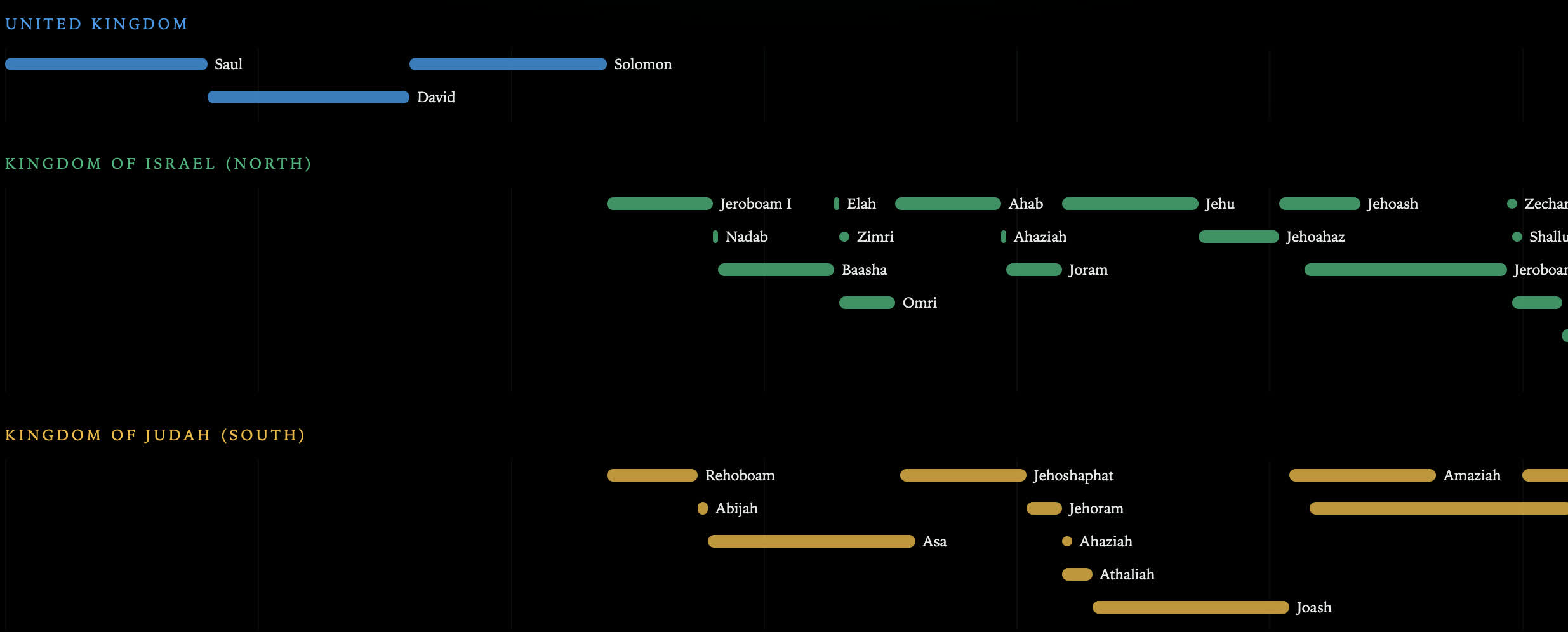
Every ruler from Saul's coronation to the fall of Jerusalem, across the united monarchy and the divided kingdoms of Israel and Judah.
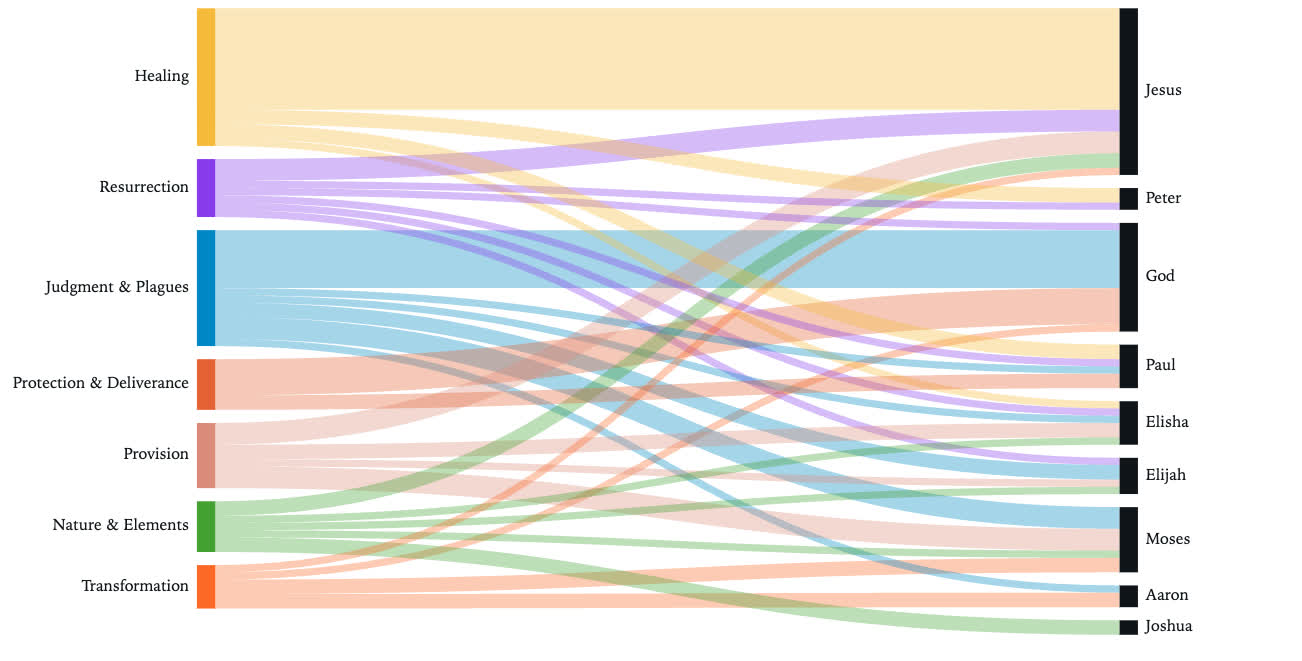
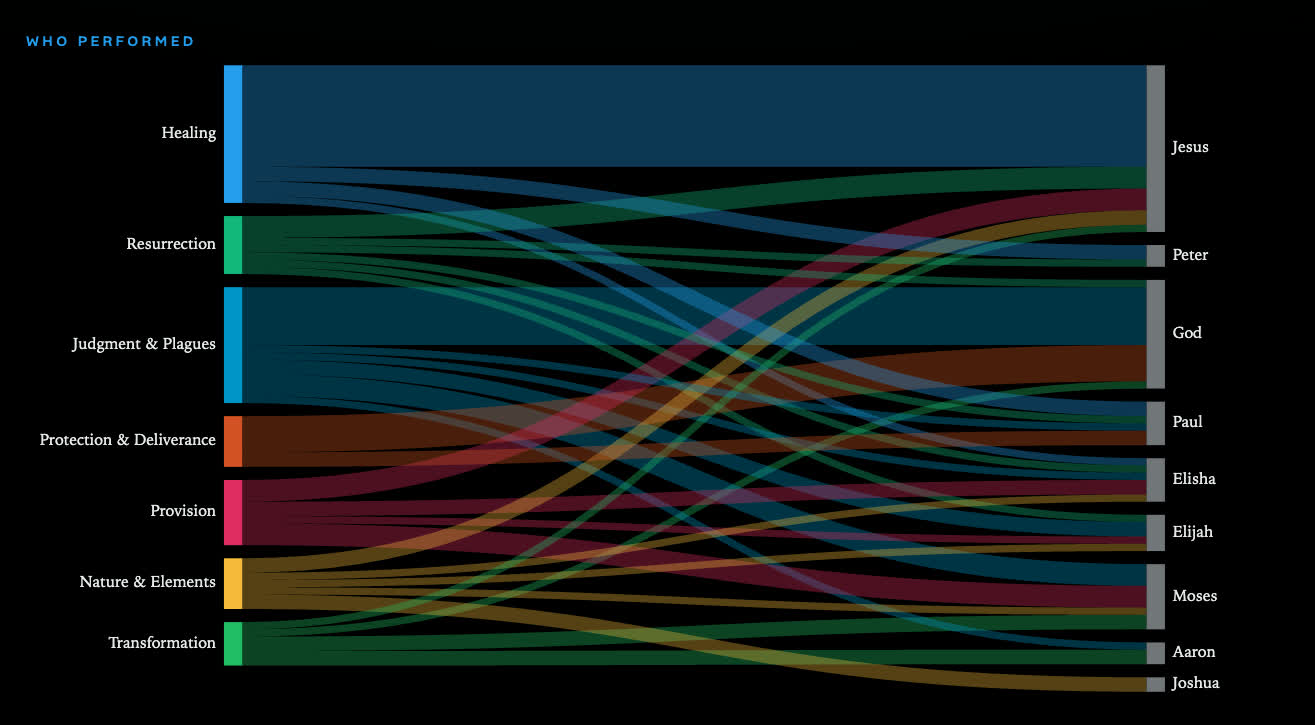
Every miracle in the Bible, grouped by kind — healing, resurrection, nature, transformation, provision, judgment, and protection.
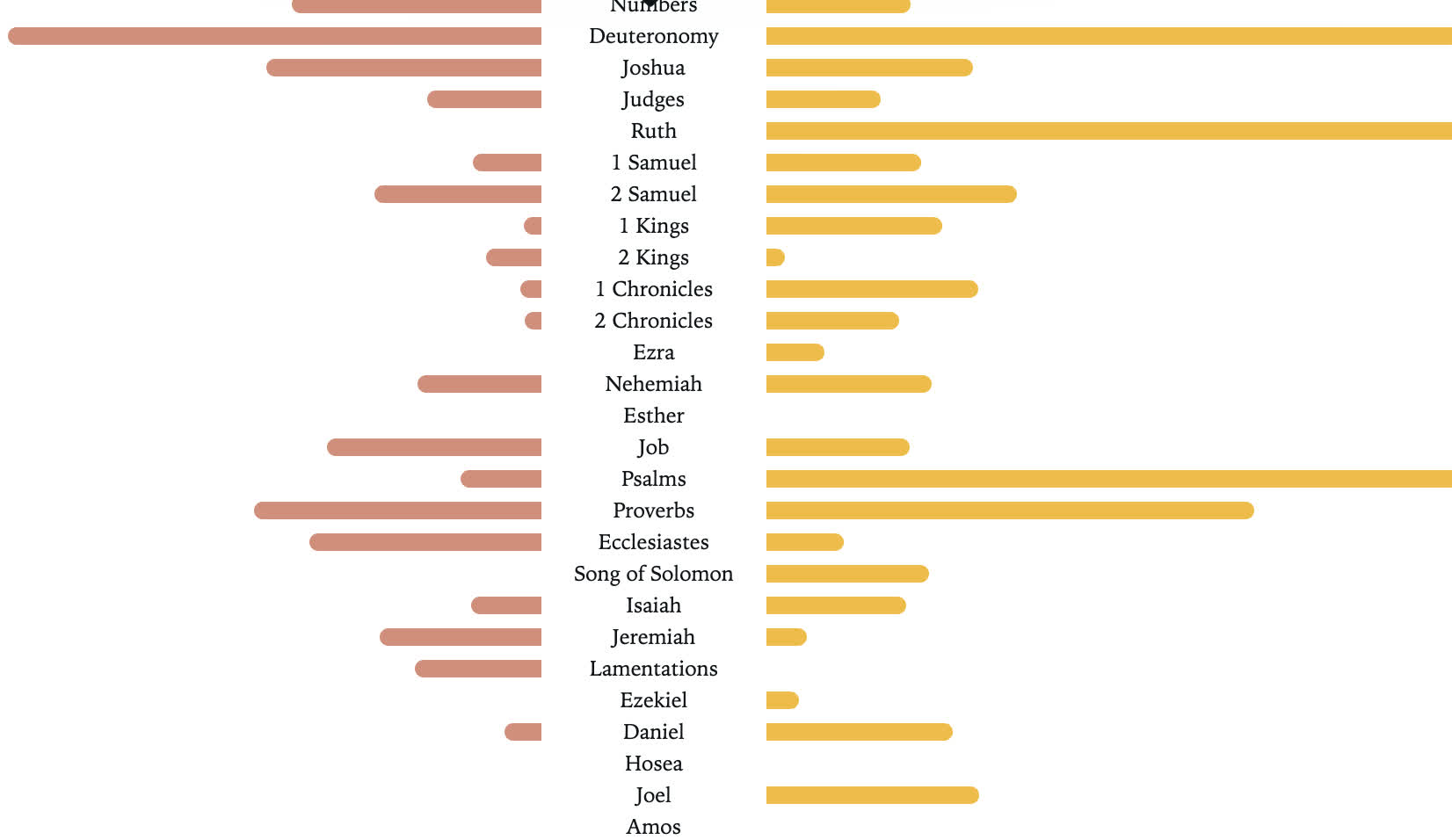
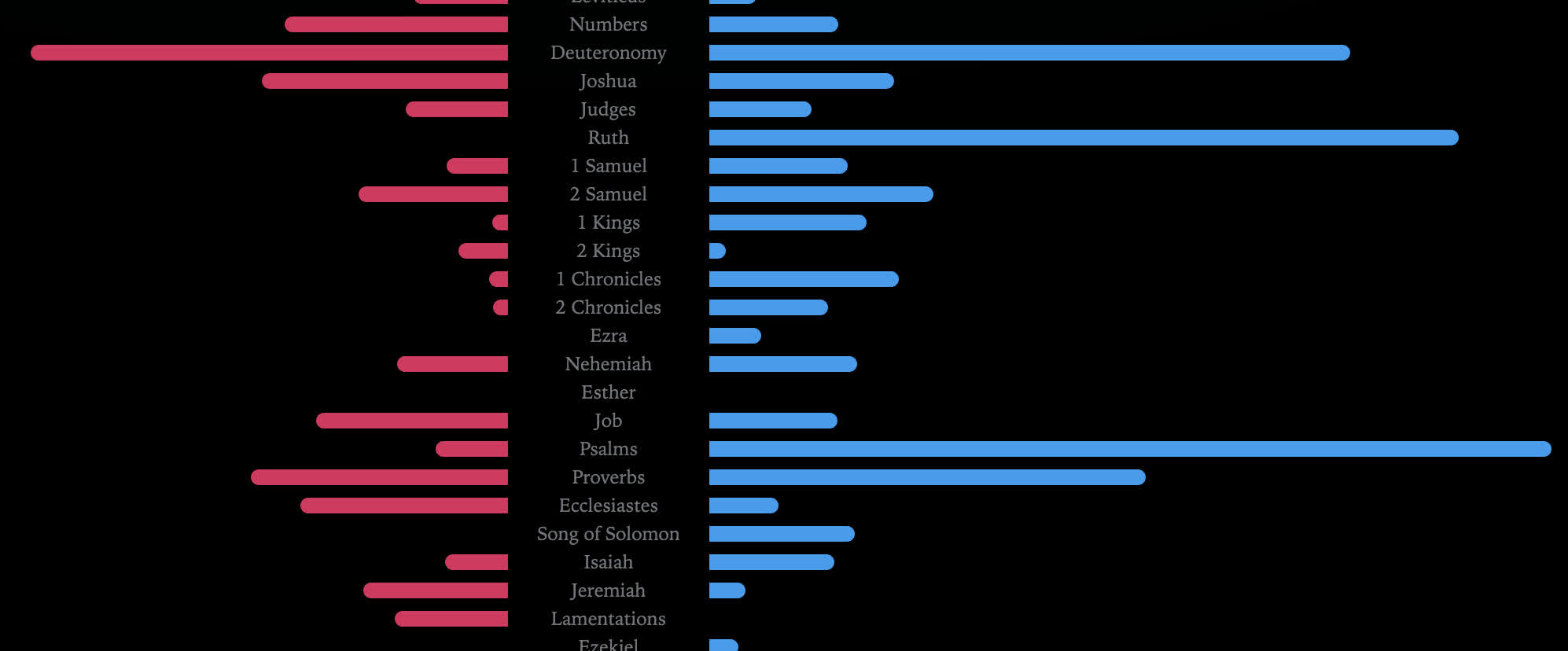
624 verses that pronounce a blessing or a curse, charted by book and laid out across the whole Bible from Genesis to Revelation.
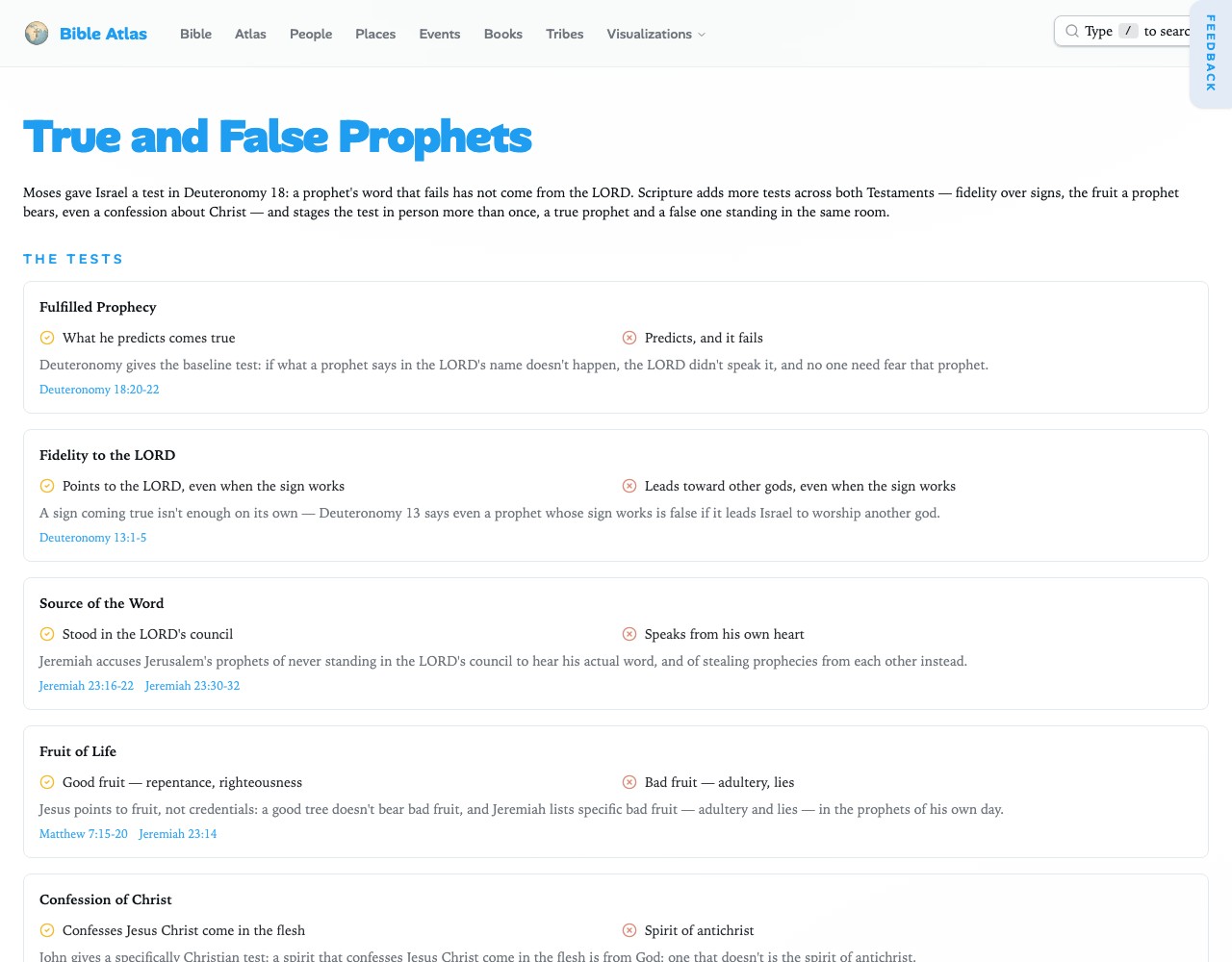
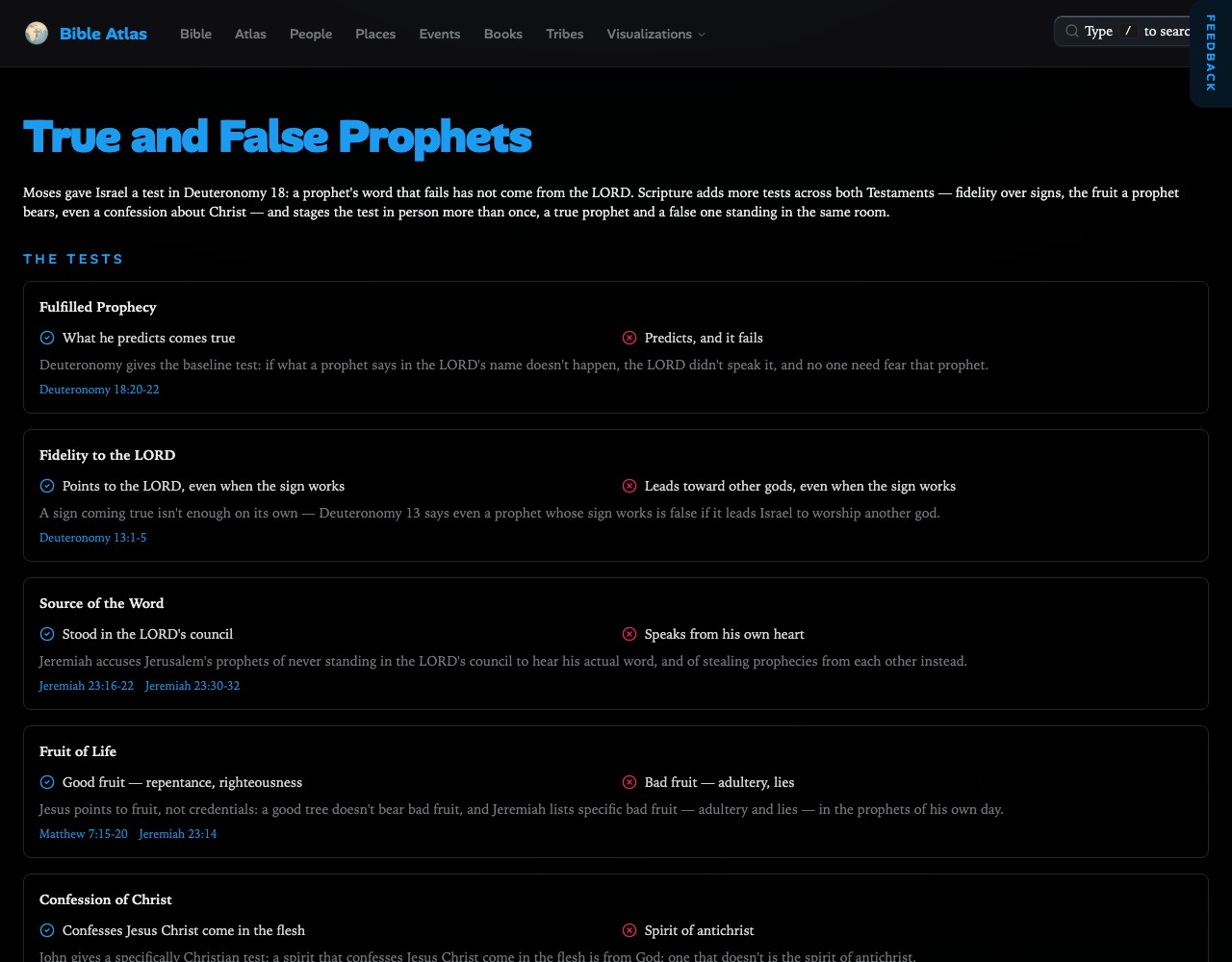
Hananiah breaks the yoke Jeremiah wears as a sign and promises the exile will end in two years. Jeremiah predicts he'll be dead within the year. Two months later, he is.
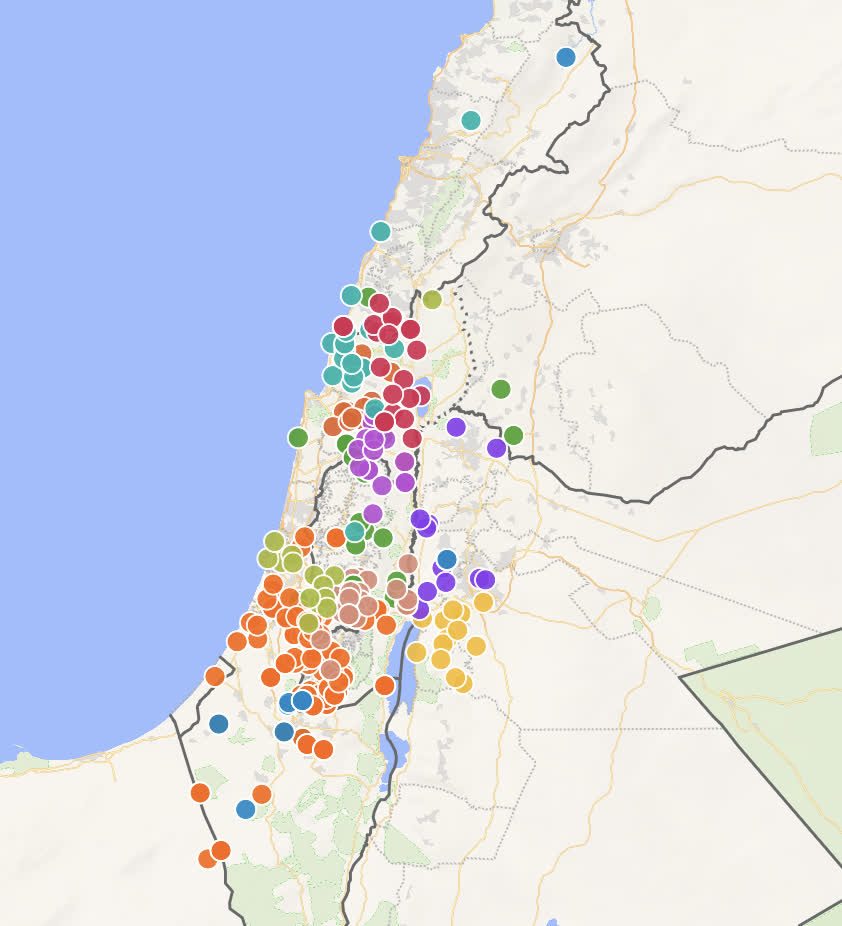
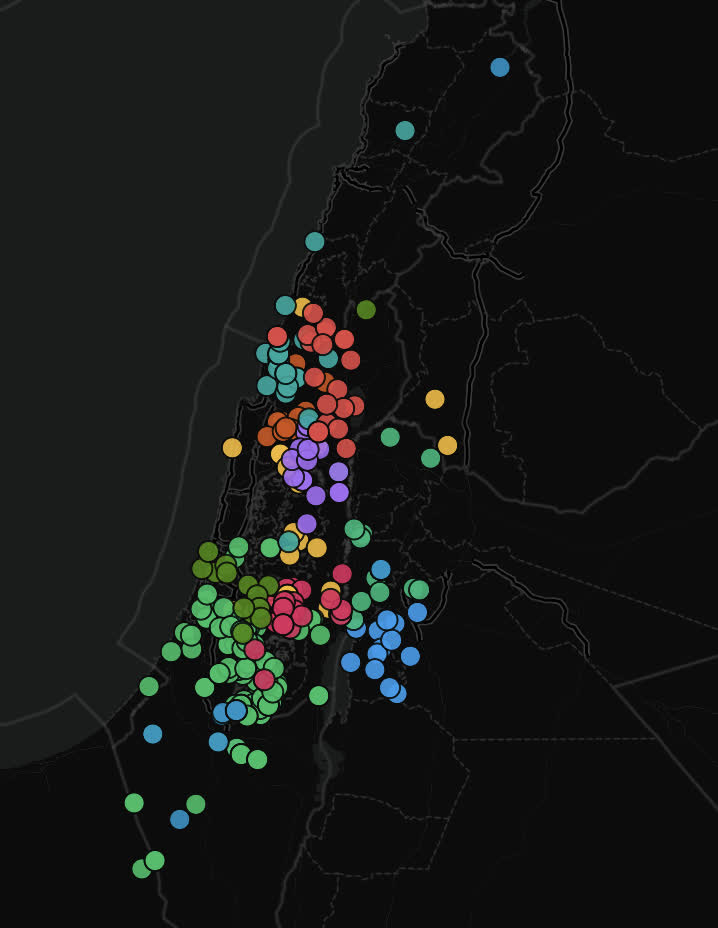
Explore the towns named in Joshua's tribal lists. See the size and distribution of each tribe's inheritance at a glance.


Add up each judge's stated years of oppression and rule and the total runs well past the roughly 300 years the Old Testament's chronology allows for the period. Many of these judgeships were regional and overlapping, not one long sequence of national rulers.
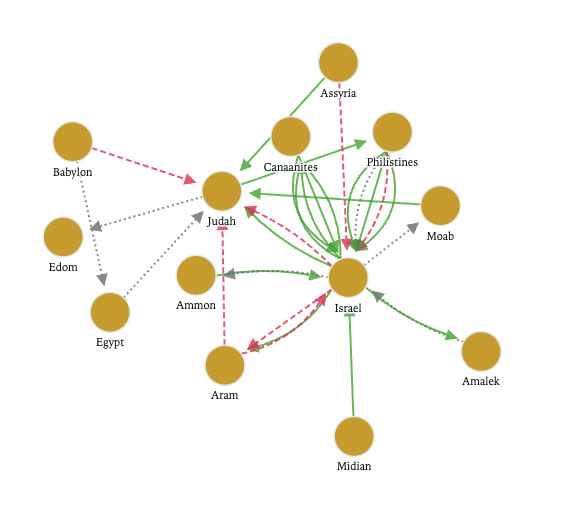
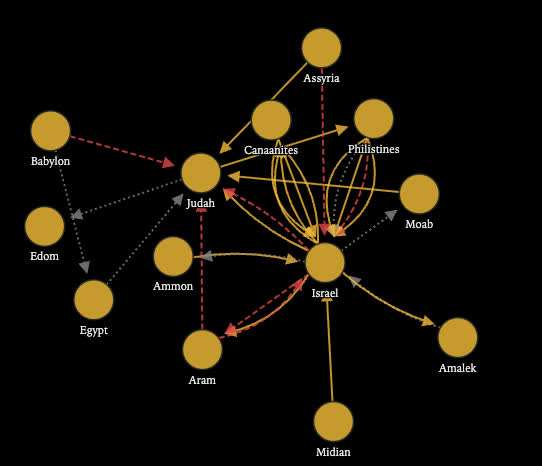
Every named war between two peoples in the Old Testament, from the conquest of Canaan to Jerusalem's fall to Babylon, framed by how Scripture itself reads each one.
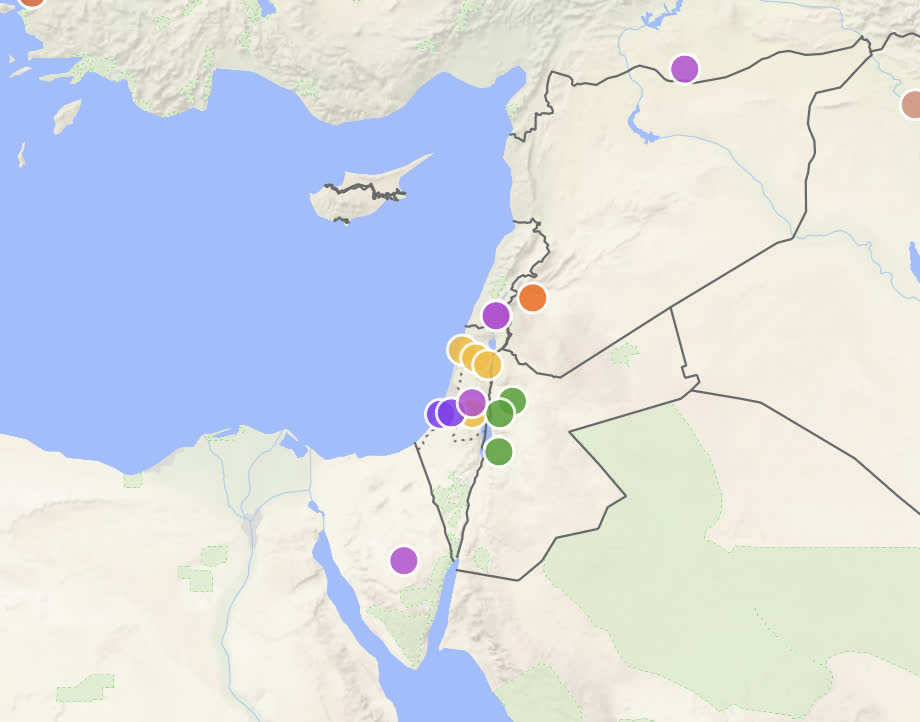
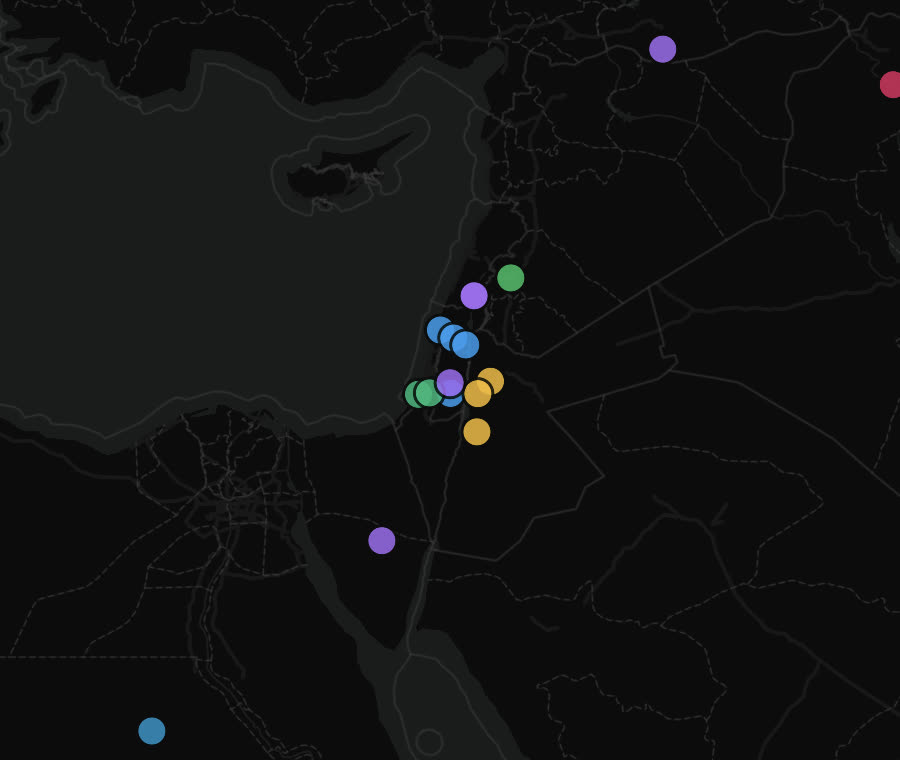
Solomon built a worship site for Chemosh and Milcom within sight of his own temple — the same hill Josiah later tears down. Every false god named in the Bible, plotted by nation and by when it appears in Scripture.
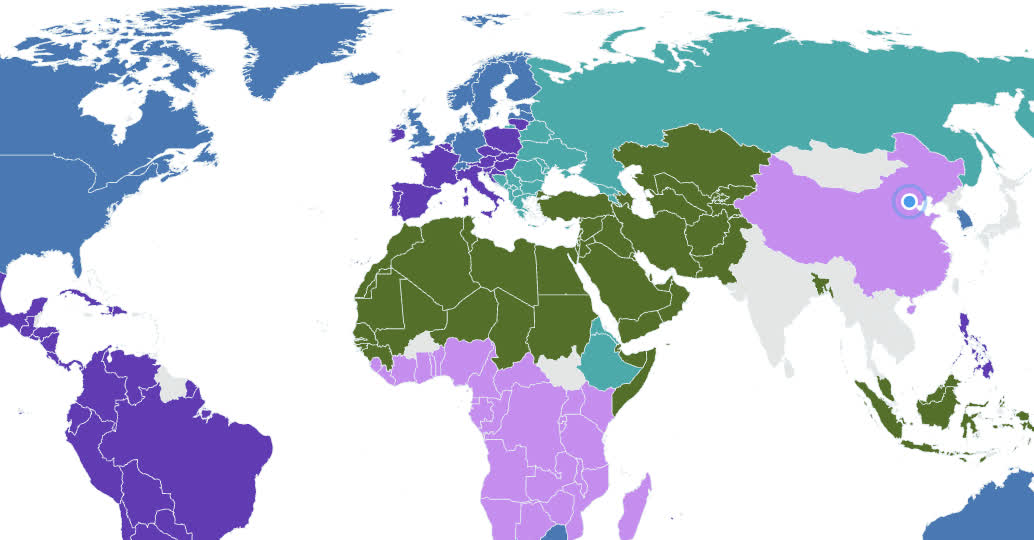
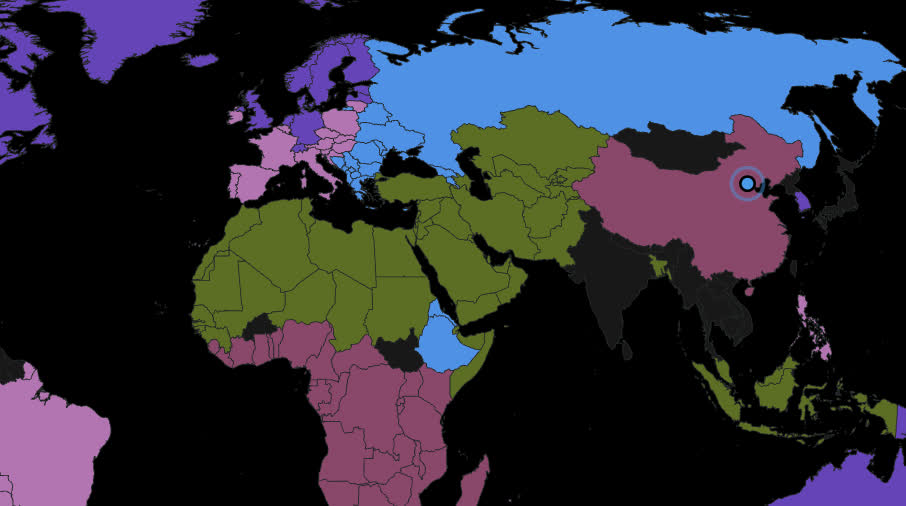
The church split once in a thousand years, then a dozen more ways in the 130 years after Luther posted his theses in 1517. The same timeline reads differently through Protestant, Catholic, and Orthodox eyes.
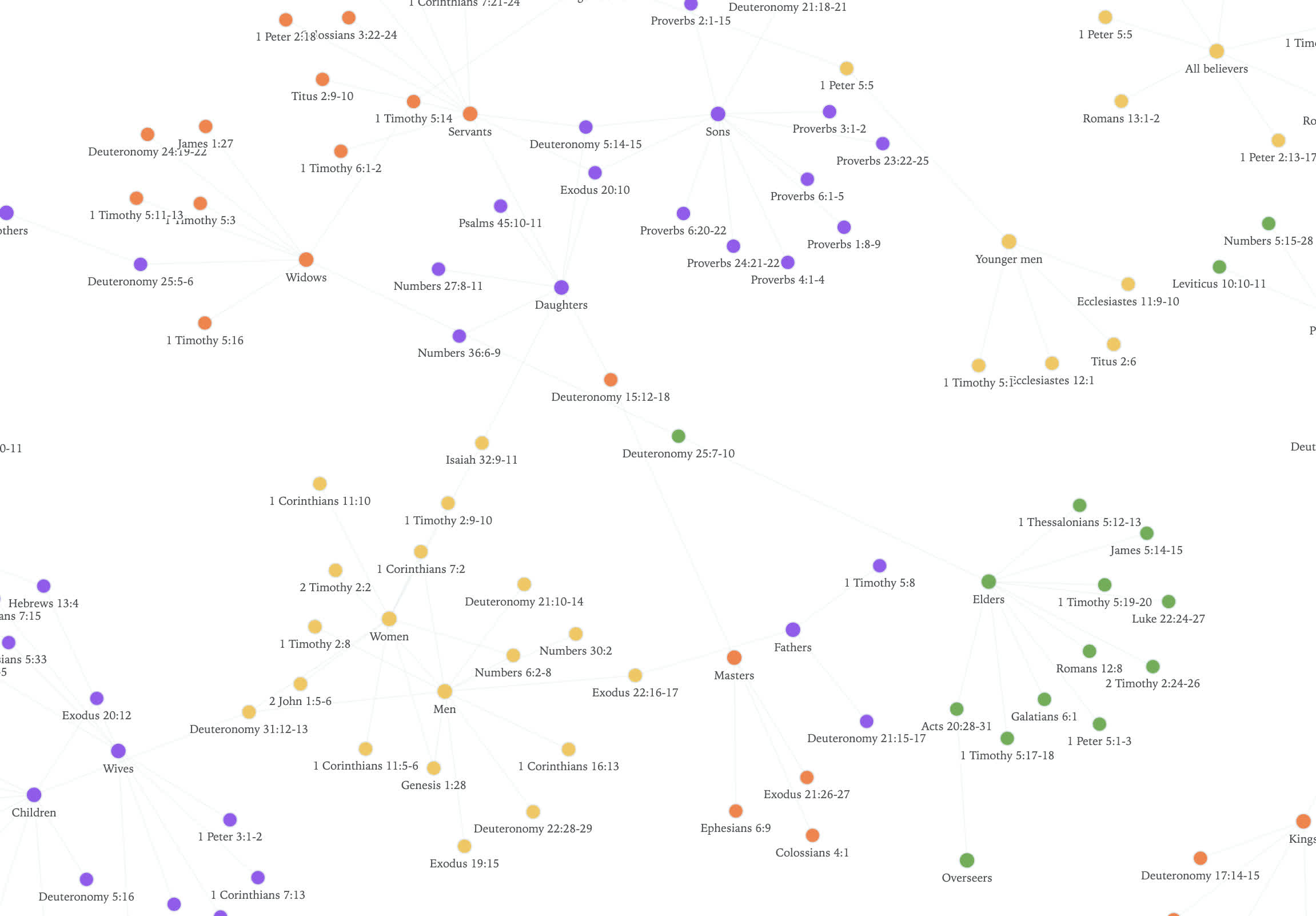
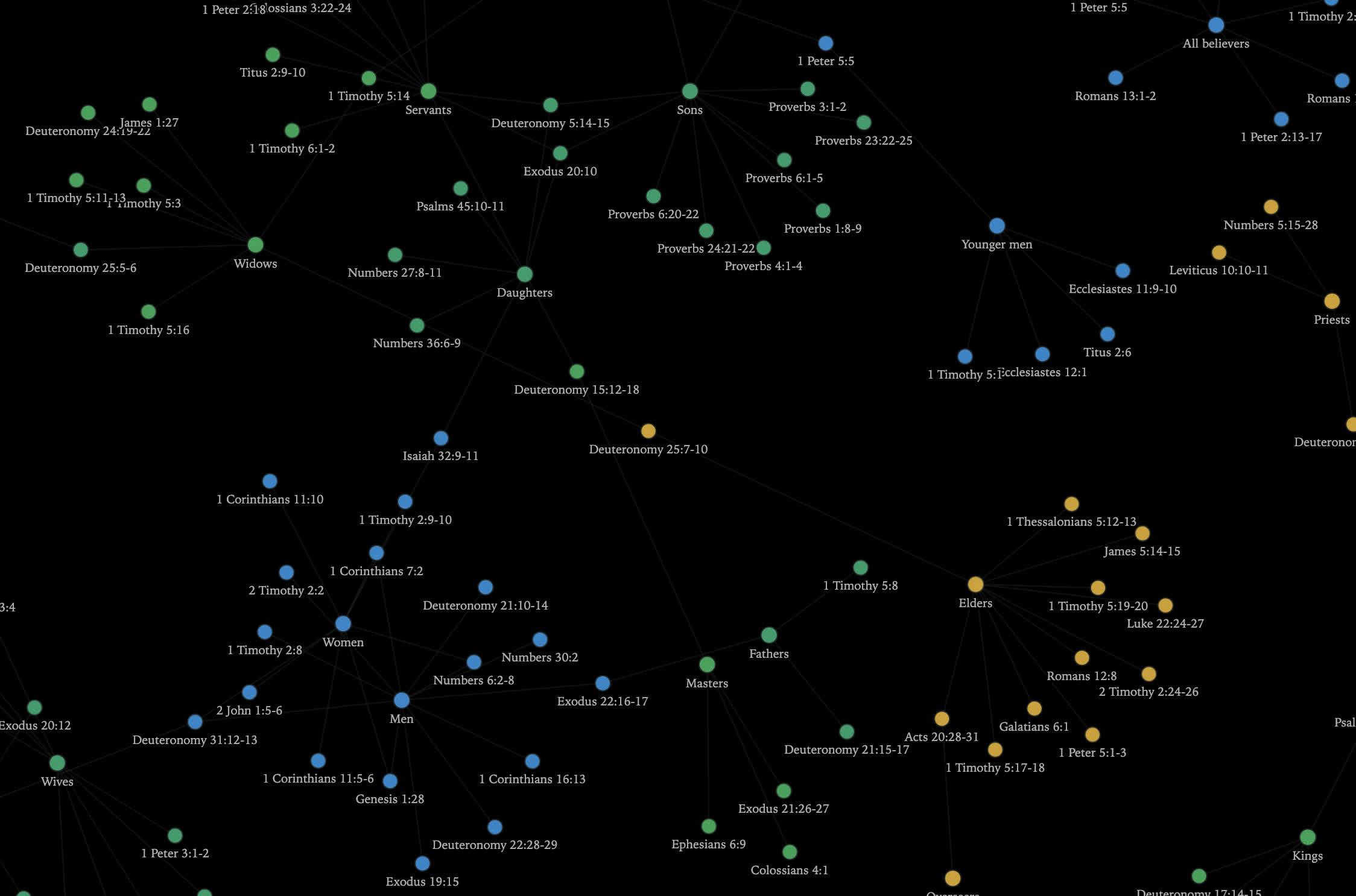
Women get the most rows of any audience, 43; older men get the fewest, 3.
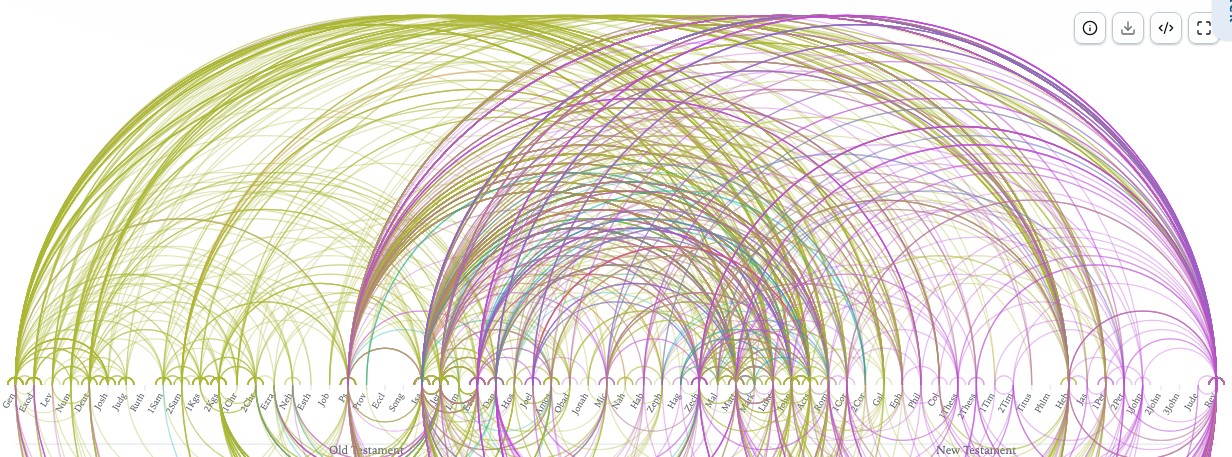
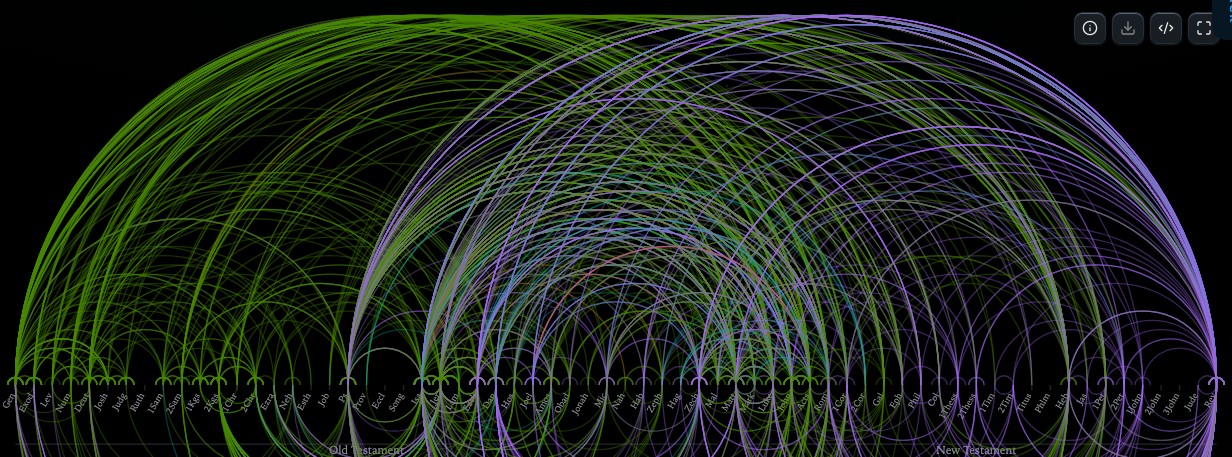
Revelation is cited as the fulfillment of more prophecies than any other book, ahead of Matthew. 873 prophecies by category, status, and the book each one lands in.
Bible maps, timelines, and family trees
One connected graph of Scripture.
The Web
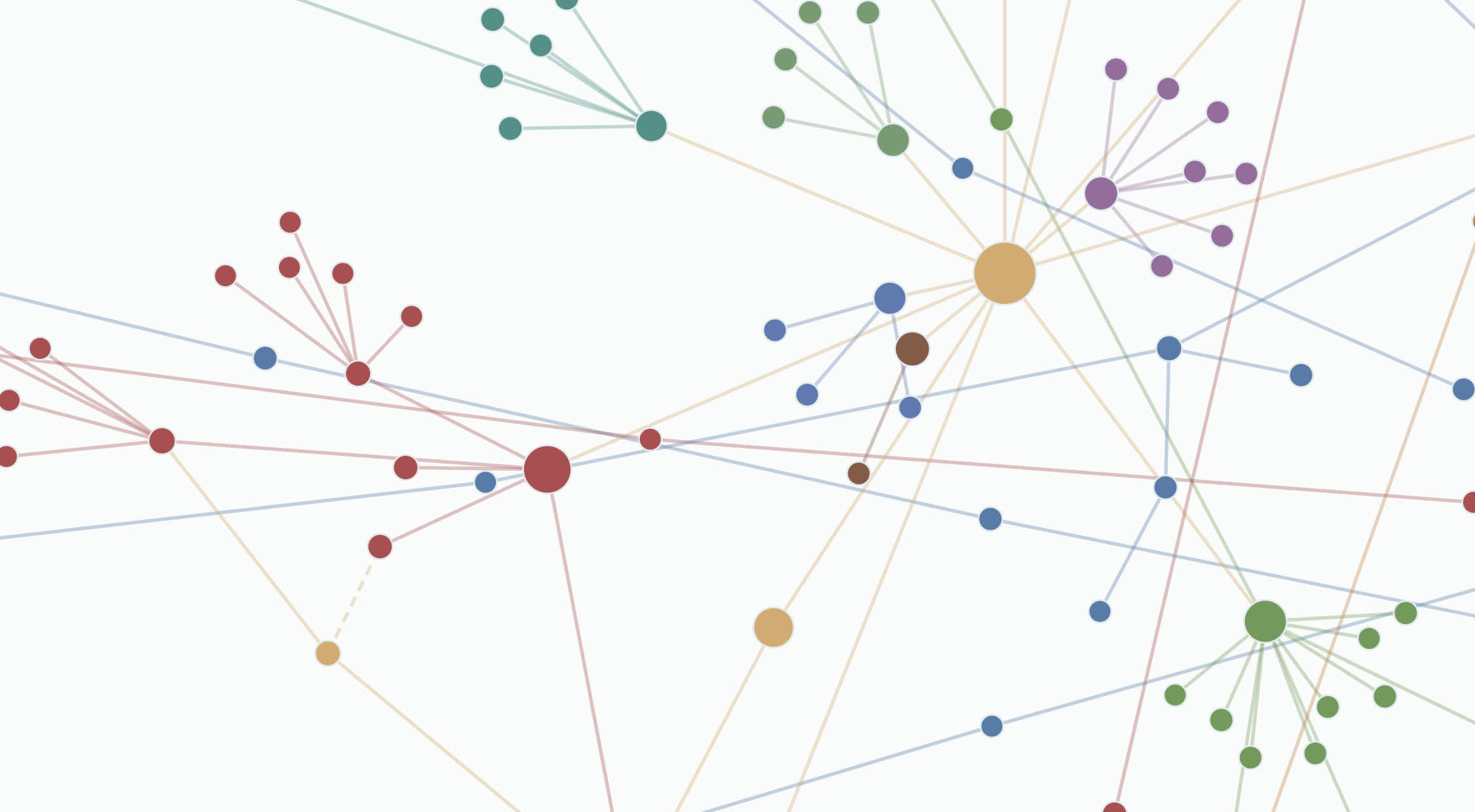
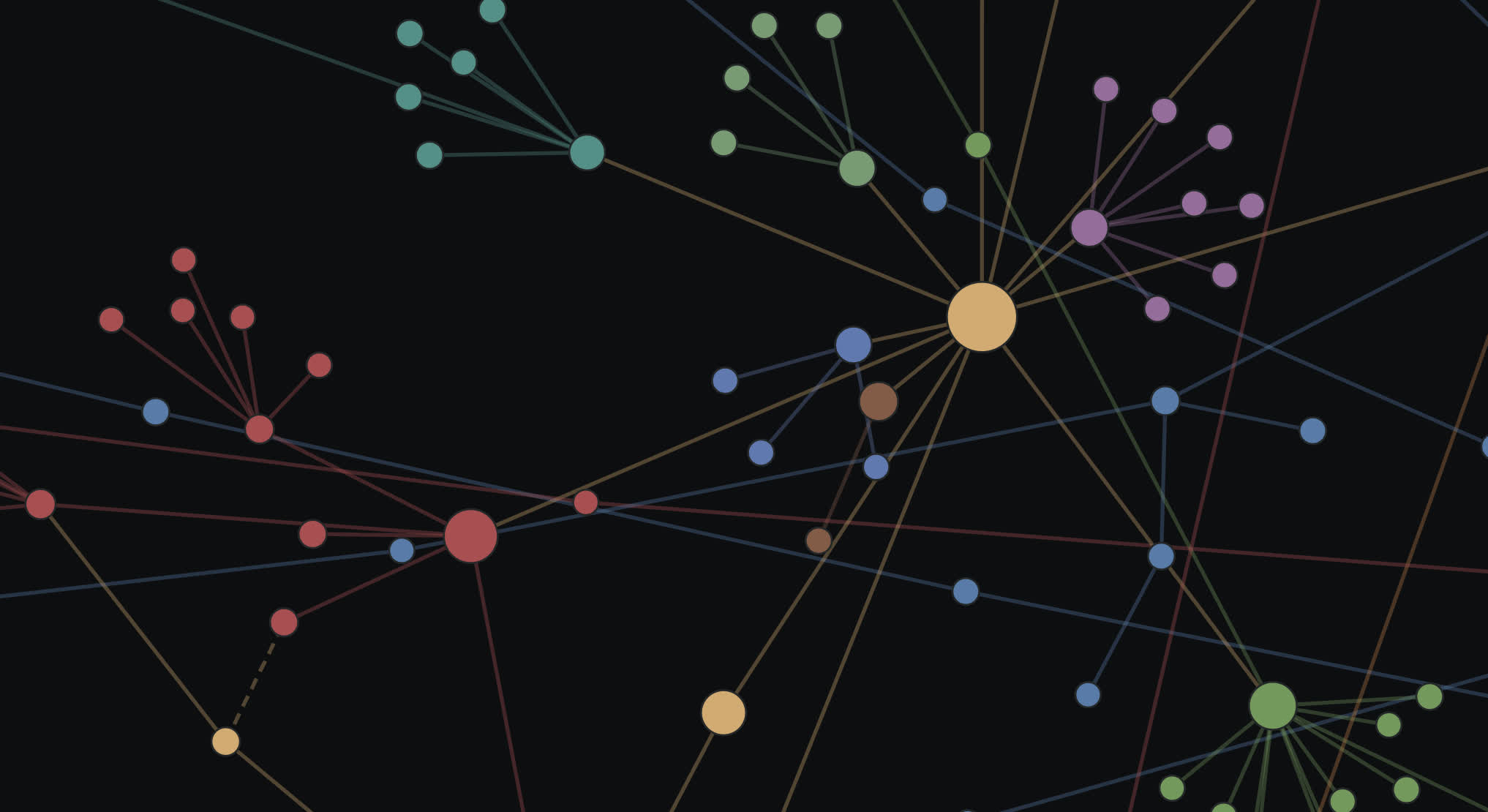
The Bible is a web of people, places, and events. Follow one connection and it quickly leads to another: a person to a city, a city to a journey, a journey to a people, a people to a story. This graph draws those connections as one network across the whole Bible, Genesis to Revelation. Larger dots are named more often in Scripture, and each line is a relationship the text records.
Family Tree
Explore
Built for the classroom
Bible Atlas is designed to be useful beyond the Bible reader. Professors can use interactive maps, timelines, genealogies, and text visualizations to help students see connections that are difficult to grasp from a page of text alone. Assign a visualization in a course, add one to a Canvas or Moodle page, or include it in a library research guide. Everything is free to use, link, and embed, so students can explore the underlying biblical data themselves.